Skip to content

Guides and tips

Bicycle check

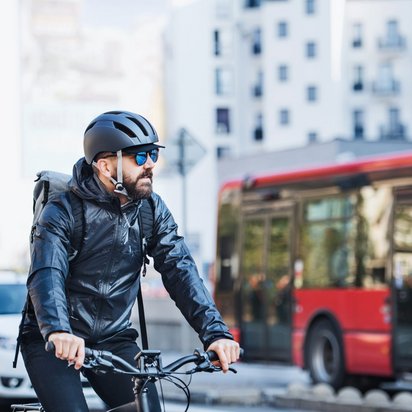
Whether it’s a city bike, mountain bike or e-bike: TÜV NORD is here to help with a practical spring check-up that ensures your bike is fit for everyday use and road safety. With our comprehensive checklist – covering everything from the frame, tyres, brakes, chain and lights right through to the e-bike battery – you can keep track of all the important points.

Fahrradfahrer mit Helm in der Stadt neben einem roten Bus

Kickoff of the cycling season

The number of bicycles and e-bikes in Germany continues to grow steadily, reaching 84 million in 2023 (2022: 82.8 million). Of these, 11 million are e-bikes.  In 2023, e-bikes accounted for 53% of sales in Germany (2022: 48%), surpassing traditional bicycles (47%) for the first time. In 2023, 1.9 million traditional bicycles (47%) were sold, compared with 2.1 million e-bikes.

Bikes from all segments were in demand – from e-bikes to children’s bikes, from city bikes to mountain bikes. Turnover from bicycles and e-bikes amounted to €7.06 billion in 2023 (2022: €7.36 billion).  (Source: ZIV Zweirad-Industrie-Verband e.V.)

No wonder, as the bicycle is a practical and environmentally friendly mode of transport that lets you cycle away from the daily grind. To ensure that your beloved bike is once again a genuine alternative to the car or public transport after the winter, it should undergo a thorough spring check. To get their bike ready for spring and summer, cyclists should take their bike to a specialist workshop for an inspection or check the most important functions themselves. 

We’ve put together a checklist with the most important tips to ensure a safe start to the cycling season.
Spring Bike Check

Bicycle frames and forks

Check the bike frame and fork for cracks, other damage or warping. If any of these issues are found, they must be replaced immediately!

Due to their complex internal workings, suspension forks are a job for a specialist. If oil leaks from oil-damped bicycle suspension forks, the seals should be replaced.

Bicycle tires and bearings

If the bike tyres do not rotate smoothly or are wobbly, it is advisable to visit a specialist shop. In most cases, the problem can be fixed using a spoke wrench. If the bike rim is bent, it will need to be replaced.

Also check the bearing play: to do this, hold the rim between your thumb and forefinger and move the wheel back and forth. If it feels wobbly, adjust the axle bearing.

Bicycle chain, sprocket, and chainrings

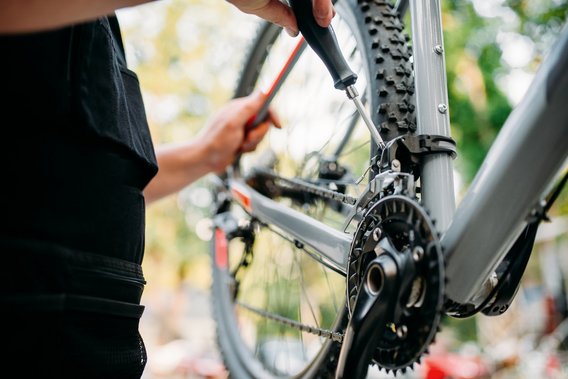
Bicycle chains are subject to heavy wear and tear. At the very latest when the chain starts to grind or squeak, it needs to be cleaned and re-lubricated. First, apply a generous amount of oil to the chain and then wipe it down thoroughly with a cloth. 

Once the chain is clean, apply lubricant to it again. Check the condition of your chain: if it is only resting on the tips of the sprockets, it needs to be replaced.

Bicycle Chain Length

You should check the length of your bike chain at regular intervals. Specialist bike shops stock special measuring gauges for this purpose. Due to the strain caused by the drivetrain and gear changes, every bike chain stretches over time. Consequently, the teeth on the sprockets and chainrings become worn down. If you wait too long to replace a worn-out bike chain, the tooth profiles will no longer mesh properly with a new chain: it will skip under load!

However, if you regularly check the bike chain for elongation and replace it when the gauge indicates it’s time, you can delay the need to replace other, more expensive drivetrain components. A regularly maintained bike chain can last up to 3,000 kilometres.

Bicycle brakes

To ensure your bike stops quickly, it is absolutely essential to check the braking system:

  • With rim brakes, it is very easy to tell whether the brake pads are worn out or still serving their purpose: if the cross-grooves on the brake pads are no longer visible, they must be replaced.
  • Also check that the brake pads are correctly positioned: they should rest evenly on the rim and must not rub against the tyre.
  • It is also important that the brake lever on the bike responds quickly. If the lever is a bit stiff, a drop of oil will help.
  • The Bowden cables on the bike must not be kinked or frayed. Defective cables should be replaced at a specialist shop.
  • Disc brakes are particularly prone to corrosion after long periods of inactivity. This usually causes the bike’s brakes to react very sharply. To avoid any resulting falls, take particular care during your first few rides. Here too, check that the brake pads on your bike are thick enough.

Bicycle tire tread and tire pressure

If the tread or pattern on your bike tyres is worn down, or if the sidewalls are brittle or cracked, treat yourself to a new set of tyres.

The narrower the tyre, the higher the air pressure: a road tyre should have a minimum air pressure of 3.5 bar, whilst a racing bike tyre can have up to 9 bar. You’ll find details of the recommended air pressure on the sidewall of the tyre.

Bicycle lights

Check that your bicycle’s lights and dynamo are working properly and make sure that the cables are not rubbing against anything. If the bicycle light does not work despite the wiring being in good condition, the dynamo is usually faulty. Replace any faulty reflectors.

Battery-powered lights, on the other hand, are very low-maintenance. Check the batteries or rechargeable cells. If they have already leaked, be sure to dispose of the light and batteries as hazardous waste. Battery fluid is highly corrosive and very dangerous. If the batteries are still in good condition, recharge them to be on the safe side.

For e-bikes with lights powered by the battery, pay particular attention to the cables between the light unit and the battery. Do they show any signs of damage, have they become damp, or is there rust on key connection points?

E-bike battery

Alongside the motor, batteries are the heart of every e-bike or pedelec. They ensure hours of riding enjoyment – or great frustration – when the battery runs flat. For this reason, you should take particular care of your battery.

If an e-bike battery has not been charged for a long time, it may have discharged. You must therefore plug it into the mains before using it for the first time. If the e-bike battery is getting on a bit and the range is becoming increasingly limited, it may be worth getting a replacement battery. This is particularly true if you are planning longer rides.

More topics related to two-wheelers & bicycles

Fahrradreparatur mit Schraubendreher

Bicycle checklist

Ready for the new season? With our TÜV NORD checklist, you can keep track of all the important points: from brakes and lights to your e-bike battery. Simply download it and set off safely!
Get a free checklist
Zwei Personen fahren auf Motorrollern durch eine landschaftliche Umgebung

scooter

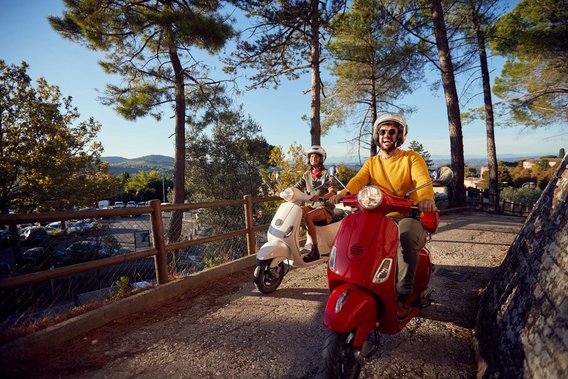
Scooters are a flexible and affordable alternative to cars. To ensure you can travel safely at all times, we offer bespoke inspection services tailored to your scooter. TÜV NORD Mobilität is your reliable partner for MOT tests, modifications and expert reports relating to your scooter.
Find out more about Motoroller
Prüfingenieur bei der Motorradprüfung an einer TÜV NORD Station

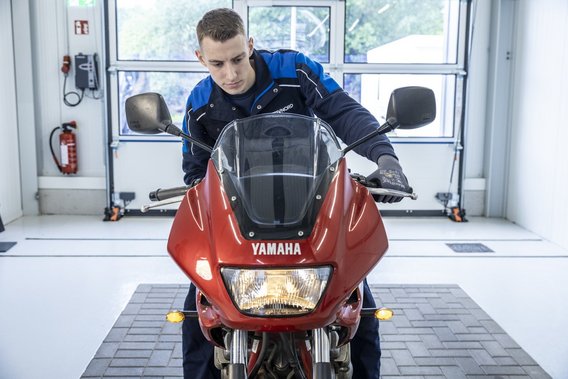
Motorcycle daytime running lights

Daytime running lights (DRLs) are designed to make motor vehicles more visible in daylight whilst minimising energy consumption. Their fitting to motorcycles (two-wheeled vehicles with a maximum design speed exceeding 45 km/h or an engine capacity exceeding 50 cm³) is permitted but not mandatory.
Find out more about daytime running lights for motorbikes

Contact

We look forward to receiving your inquiry!