Guides and tips
Tuning makes your vehicle unique, but not all modifications are automatically permitted. Find out which test certificates are required, how individual approvals work, and what you need to bear in mind when making modifications to ensure your vehicle remains safe and roadworthy.
Request tuning approval now
Anything goes, provided it’s to your liking and complies with the Road Traffic Regulations (StVZO). The catalogues of the accessories industry are as thick as telephone directories. There is a tuning part to suit almost every requirement. To ensure that your safety and environmental protection are not compromised during the modification process, the Road Traffic Licensing Regulations (StVZO) require appropriate safety certificates. TÜV NORD Mobilität supports you with your tuning projects. With safety assured.
With these certificates, you’re on the safe side:
Test certificates contain not only installation instructions but also restrictions and conditions. Many tuning parts are only approved for specific vehicle types listed in the test certificate.
There is no substitute for your health. Once tuning parts with type-approval certificates have been fitted, our officially recognised experts or test engineers check whether the parts have been correctly installed on your vehicle and whether the specified restrictions or conditions have been met. We confirm that the parts have been fitted or installed correctly by issuing a so-called “certificate of installation”.
With an ABE or ABG, you do not need a modification approval, unless this is specifically required in the approval. If this is not the case, simply add the ABE / ABG to your other vehicle documents and put everything together in your bag. If a modification approval is required, your next journey after fitting the tuning part must take you to the expert or test engineer.
For parts with EC or ECE approval, you generally do not require a modification approval. It is best to always carry the approval documents or installation instructions with you, along with your vehicle documents. In any case, you should keep these in a safe place.
Tuning modifications can have a negative impact on one another; for example, a wheel and tyre combination used in conjunction with a smaller sports steering wheel or a suspension system.
When purchasing tuning parts that may affect one another, ensure that the test certificates explicitly state that the combination of parts is permitted.
When is individual approval required?
Do you want more individuality? Do you want to combine several tuning parts that affect each other without the corresponding approval in the test certificates? Are you the proud owner of a one-off item manufactured or modified specifically for you?
In these cases, an assessment in accordance with Section 21 of the Road Traffic Licensing Regulations (StVZO) by an officially recognised expert is required. For extensive modifications, seek advice from your expert in advance to determine whether the planned tuning is eligible for approval and what assessment costs you can expect.
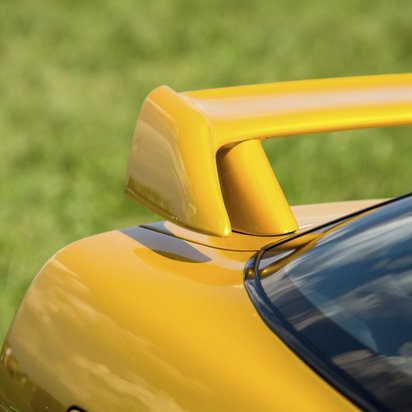
Following an individual inspection, have the vehicle documents amended without delay. To do this, you must submit the expert’s report to the registration office.
In the case of modifications, the installation certificate will always state whether the vehicle documents must be updated immediately or only at your next visit to the registration office. If immediate updating is not required, it is sufficient to carry the installation certificate with you along with the vehicle documents.
From the perspective of car insurance, increases in engine power and other extensive tuning modifications may constitute an increase in risk. You must therefore always notify your car insurance provider of any increases in engine power, even if this does not result in your vehicle being classified in a higher power category. In the case of extreme chassis modifications, such as lowering the vehicle in combination with particularly wide tyres, we recommend that you inform your car insurance provider as a precautionary measure, so that your insurance cover remains in place in all circumstances.
A component inspection or individual approval under Section 21 of the Road Traffic Licensing Regulations (StVZO)? Make use of our direct line to our technical experts and get your questions answered.