Guides and tips
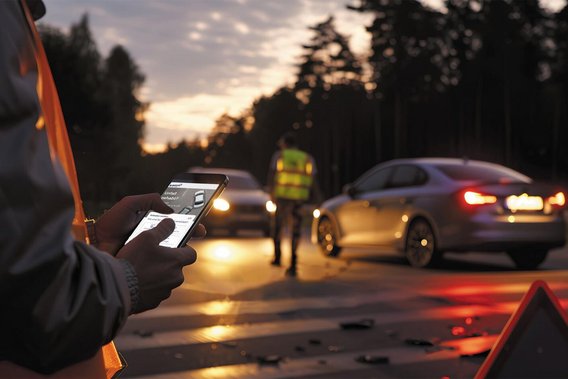
The eCall automatic emergency call system automatically alerts the nearest emergency services control centre in the event of a serious accident and transmits key data such as the location, time and direction of travel. eCall has been mandatory in new vehicle models since 2018. TÜV NORD explains how the system works, what benefits it offers and what to look out for with retrofitted eCall solutions.

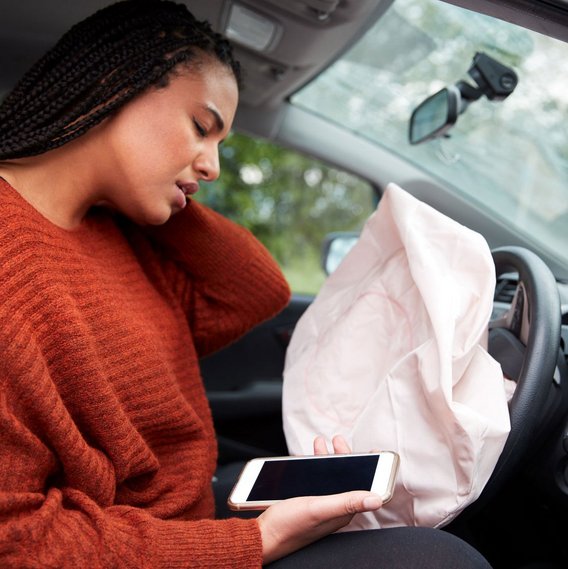
Every year, there are around 2.5 million collisions on Germany’s roads. In the event of a serious accident or a heart attack in the car, every second counts.
The automatic emergency call system, eCall, saves a lot of time. Emergency services can reach the scene of an accident more quickly than if they were alerted in the usual way – for example, via mobile phone or an emergency telephone box.
Find out here how the system works, which vehicles must be fitted with it, and where the SOS button is located in the car.
In the event of a serious accident involving a violent impact, the system transmits what is known as a minimum set of data (MSD) – a small data packet containing information on the vehicle’s position and other vehicle data.
There are two different systems for this:
With the mandatory introduction of the eCall system, as a vehicle owner you have the right to choose between the TPS eCall and the 112 eCall system. When purchasing a new car, you can deactivate the TPS services if you wish and instead have only the EU eCall activated. Most imported cars from foreign manufacturers have 112 preset.

In addition to the voice emergency call, the vehicle’s eCall system transmits a so-called minimum data set (MDS, 40 bytes) containing mission-critical information directly via the voice channel.
This includes, amongst other things:
The emergency services can be dispatched to the scene of the accident in the shortest possible time with all the relevant information. This means that injured people can be rescued and treated more quickly following serious road accidents.
The emergency call can also be triggered manually. This means that drivers can also make a 112 emergency call and contact the control centre in the event of other medical emergencies, such as a heart attack.
Once you have pressed the SOS eCall button, the car will emit an audible and visual warning.
You can cancel the process by pressing the eCall button again within 15 seconds.
Most new cars are fitted with an SOS button. However, very few people have probably ever used eCall. It is therefore important to know where the SOS button is located in case you need to activate it manually.
Depending on the type of vehicle, the eCall button is located in the headliner or on the dashboard.
In principle, there is no obligation to retrofit older models that were not originally fitted with eCall as standard. However, if you would still like to have this feature, you can retrofit the automatic emergency call system using a so-called accident notification plug (UMS).
What actually happens when the emergency call system is triggered? Find out what data is transmitted, how the voice connection to the emergency control centre is established, and why the system can still help even if the person is unconscious.