Guide and tips
A high-visibility safety waistcoat can save lives in an emergency. In Germany, it is a legal requirement for cars, lorries and buses to carry a high-visibility waistcoat. But what exactly applies, which standards must be complied with and what is the situation in other countries? TÜV NORD provides an overview of the most important regulations.
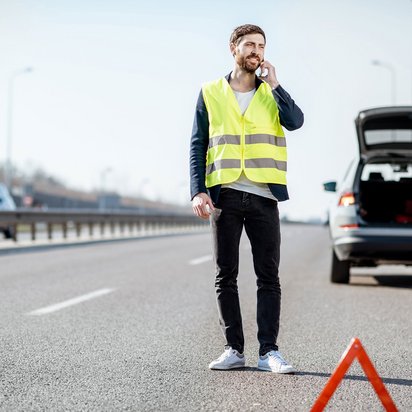
Since 1 July 2014 at the latest, every vehicle must be fitted with a high-visibility waistcoat. This new regulation applies to all cars, lorries and buses registered in Germany; motorbikes remain exempt. The high-visibility waistcoat is already mandatory in commercially used vehicles.
The waistcoat with the Euro standard EN 471 or ISO 20471 is intended to make drivers and passengers more visible to other road users in the event of a breakdown or accident.
Even though only one high-visibility waistcoat per vehicle is prescribed in Germany, we recommend that all vehicle occupants carry a high-visibility waistcoat in the passenger compartment. In some countries this is even a legal requirement. You can obtain high-visibility waistcoats from your TÜV NORD centre.
According to road safety experts, wearing a high-visibility waistcoat increases visibility to around 150 metres in twilight. Without a waistcoat, pedestrians would only be visible to drivers from a maximum distance of 80 metres. To ensure that the waistcoat is ready to hand in the event of an emergency, it is best to store it in the car interior near the driver's seat. This way, the occupants can get out of the car wearing the waistcoat.