Skip to content

Guides and tips

Preparing your motorhome for winter

Get your motorhome ready for winter – with practical tips and a checklist from TÜV NORD. Whether you’re planning to store your vehicle over the winter or make it winter-ready for travel, we’ll show you how to store it properly, both mechanically and hygienically, so you can hit the road again in the spring with peace of mind.

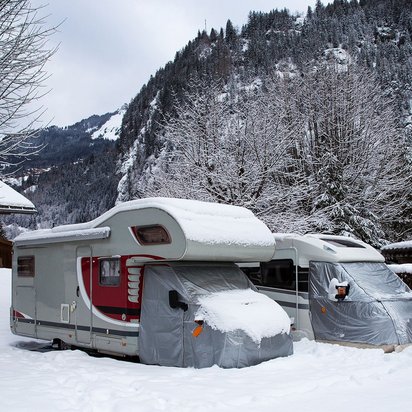
Wohnmobile im Schnee in einer winterlichen Berglandschaft

Winter break? No problem! TÜV NORD shows you how to keep your motorhome optimally protected

Anyone travelling in a motorhome and wanting to enjoy the ‘best days of the year’ should play it safe and always ensure their vehicle is in full working order. This protects you from unpleasant surprises and you’re sure to take pleasure in seeing your trusty travel companion looking its best.

After all, a motorhome in immaculate condition also retains its value, and should you ever wish to sell it, you’ll have no trouble finding a buyer.

If you follow the advice below regarding maintenance, care and winter storage, you’ll be on the road with a reliable and attractive motorhome for years to come.

Although modern motorhomes are generally suitable for travel during the cold season thanks to good insulation, an efficient heating system and heated fresh and waste water tanks, many – particularly larger motorhomes – are still not driven for extended periods.

It is therefore advisable to have your motorhome professionally ‘stored’; this way, you can wake it from its ‘slumber’ in the spring and start the travel season without any problems.
All-round preparation

Parking motorhomes

  • It is advisable to store the motorhome in a hall or at least under a carport.
  • The handbrake should not be applied; instead, put the vehicle in first gear and, if necessary, secure the motorhome with wheel chocks.


Interior of the motorhome

  • In any case, you should remove all food and leave the fridge door open.
  • Open all storage compartments, flaps and cupboards to allow for ventilation, and prop up the cushions.
  • In a dry and clean hall, you should leave the windows open for ventilation; this relieves pressure on the rubber seals.
  • Placing a dehumidifier in the centre of the vehicle helps to reduce humidity and prevents the formation of mould or ‘musty’ odours, amongst other things.
  • Leave the taps in the middle position (for hot and cold water) open so that the water can drain from the hoses and no germs form.
  • When cleaning the interior of the living area, there are only a few points to bear in mind and it is somewhat similar to ‘house cleaning’. However, the bathroom, the hob and the sink deserve special attention:
    • In the bathroom, do not use aggressive standard household toilet cleaners on the toilet, and avoid using aggressive cleaning agents on plastic surfaces. The toilet flush lever should be sprayed with silicone spray from time to time to ensure it remains smooth-running.
    • For the gas hob, which is fitted in most cases, and the sink, use a stainless steel cleaner.


Technology check

  • As a general rule, both the fresh water and the waste water must be drained. If this is forgotten, the ‘anti-freeze valve’ may open at low temperatures, causing the remaining fresh water from the tank and boiler to leak out into the hall, for example! This frost protection valve, which is usually located near the gas boiler, must be opened so that the system can be completely drained. During the draining process, the main switch (or fuse) for the fresh water pump must be switched off.
  • The waste water tank should be flushed beforehand and left open after it has been completely drained.
  • For safety’s sake, the gas cylinders are not only closed but completely disconnected from the hose.
  • Before winterising, you should check the MOT sticker. The next inspection date may fall during the ‘hibernation’ period.
  • In general, you should always keep an eye on tyre pressure (increase tyre pressure by around 0.5 bar) and engine fluids, topping them up as required. This primarily includes
    • engine oil (always follow the manufacturer’s specifications and guidelines),
    • brake fluid (visit a garage if there is a significant loss!),
    • coolant and
    • power steering fluid.
  • Topping up the windscreen washer system is relatively straightforward.
  • While we’re on the subject of fluids, beginners and rental customers in particular should take care not to accidentally fill the fresh water tank with fuel. This disastrous mix-up unfortunately happens very often and results in high costs due to the replacement of the entire fresh water system.
  • Although the LPG system is inspected every two years by a TÜV NORD expert, you should always keep an eye on the gas pipe connections and the rubber hose. If you have a leak detection spray to hand, you can carry out a check. Otherwise, you can brush a homemade mixture of water and washing-up liquid onto the screw connections and test them. If small bubbles appear, there is a leak.
  • With the hob, you can easily check whether the ignition safety device is working: simply blow out the flame and wait to see if the gas supply cuts off after a few seconds.


Cleaning and sealing

  • As a general rule, vehicles must not be washed on private property. This is not necessary anyway, as many ‘car wash parks’ (self-service wash bays) have high-sided bays and also a platform or scaffolding from which you can easily wash the roof and the higher parts of the motorhome.
  • After the initial clean with a high-pressure washer, care should be taken when washing to ensure that the acrylic windows are cleaned only with a soft sponge and light pressure, as they scratch easily. The high-pressure washer should also not be directed straight at the ventilation grilles of the fridge or the heating flue.
  • Otherwise, a motorhome is washed in the same way as a normal car, using the appropriate cleaning products.
  • There are special cleaning agents available for GRP mouldings (glass-reinforced plastic), such as the rear apron or the acrylic windows. Specialised cleaners also remove dark rain streaks or insect residues with ease. As many motorhomes have a protective film applied, you should not use aggressive cleaning agents and under no circumstances allow the product to sit for long periods.
  • It is not just the engine that deserves attention, but also the living area. A special care product helps the numerous rubber seals on doors, windows and storage hatches retain their elasticity for longer. In the spring, the entire fresh water system should be sanitised. Furthermore, a leak test should be carried out, and you should always check for leaks around roof hatches and inside wall cupboards following heavy or prolonged rainfall.
  • If, after washing the motorhome, you wish to restore the bodywork with a polish and then seal it with a wax, you should use a product suitable for the relevant surface (paint, plastic, film, etc.).
  • After cleaning the paintwork and the GRP parts, it is advisable to apply a protective treatment.
  • To ensure that the effort involved in working by hand or with a polishing machine on large surfaces is worthwhile, you should use waxes that offer long-lasting protection. Professional detailing products offer long-lasting protection, including through a ceramic sealant. This promises shine, lasting protection and less effort when washing.

Note: If you have driven on winter roads that have been gritted with salt before putting your motorhome into storage for the winter, the underbody must be cleaned using an underbody wash. Otherwise, corrosion of the bodywork, chassis and braking system will be exacerbated.

Checking the motorhome during the winter

  • If you are storing your vehicle over the winter, you should still check on it from time to time and connect it to the mains to ensure the battery remains charged.
  • The starter battery should be charged occasionally using a charger. It is particularly important at low temperatures that the battery voltage is sufficient.
  • During longer periods of inactivity, it is also advisable to move the motorhome slightly to prevent the tyres from suffering flat spots.
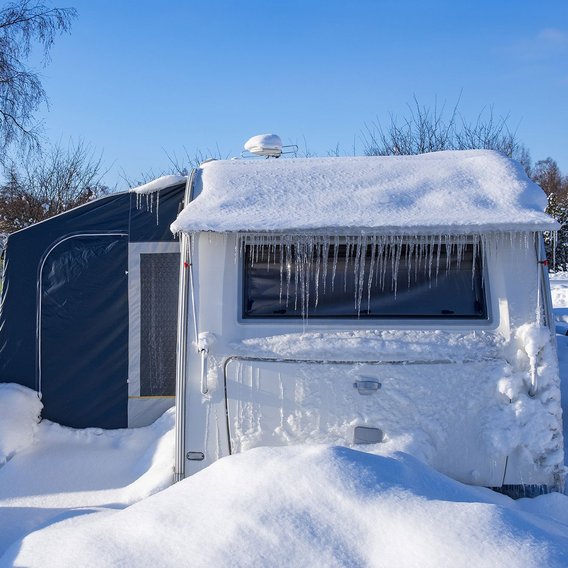
Wohnwagen im Schnee mit Wintervorzelt

Winter camping: travelling safely with a motorhome

Winter camping in a motorhome or caravan can be an unforgettable experience – with crisp air, snow-covered landscapes and a chance to truly unwind. To ensure your enjoyment isn’t dampened, you need to be properly prepared: TÜV NORD explains what really matters when camping in winter.

More and more camping enthusiasts are discovering the quiet beauty of winter: in 2024, there were just under 42.9 million camping overnight stays in Germany – a new record compared to 2023 – with regions such as the Baltic Sea, the Black Forest and the North Sea particularly popular in winter.

Between the North Sea and the Alps, around 220 campsites are open in winter – many offer direct access to cross-country ski trails, ski slopes or beaches and are booked up early. So booking well in advance is essential.

Preparing motorhomes and caravans for winter camping

  • There is no legal requirement for caravans to have winter tyres.
  • However, we recommend fitting winter tyres to caravans as well, as they help stabilise the combination when braking and cornering.
  • For towing vehicles and motorhomes, winter tyres are an absolute must in winter.
  • Make sure your tyres bear the so-called Alpine symbol – a mountain with three jagged peaks and a snowflake inside.
  • In Germany, the requirement to use winter tyres applies depending on the conditions. This means that if winter road conditions such as black ice, snow or icy roads prevail, you may only drive with winter tyres.
  • Check the current regulations abroad before setting off.
  • Tyre tread depth is also important: the legal minimum is 1.6 millimetres.
  • However, we recommend a tread depth of at least 4 millimetres for better grip in winter.

  • Always use only propane gas for your gas system in winter, as butane gas is only suitable for temperatures above zero degrees.
  • Allow for at least three to four kilograms of gas per day.
  • Some winter pitches now also have connections to a fixed gas mains network.
  • Only set off with full gas bottles and check the gas level regularly to prevent the heating from failing.
  • If there is no gas level indicator, check your gas supplies regularly using a gas gauge or gas checker.
  • A Duo-Control system is ideal. This allows you to connect two cylinders, and the system automatically switches from the empty to the full gas cylinder.
  • Don’t forget to heat and ventilate. Regularly airing out the space ensures air circulation and prevents dampness in your mobile home.
  • Also ensure that the flue pipe for the heating is not blocked.

  • To prevent frost damage, do not fill the water tanks until the heating has been running for a while and the interior has warmed up.
  • Ensure that the water pipes cannot freeze.
  • Heated water tanks prevent freezing or potential frost damage to the water system.
  • If the waste water tank cannot be heated, drain the waste water directly and collect it in a bucket.
  • Add some antifreeze to the bucket to prevent the water from freezing.
  • To prevent the boiler from freezing when the vehicle is stationary for a long period, many boilers are fitted with a frost protection monitor.

  • In winter, use shore power wherever possible to prevent the vehicle’s battery from running flat.
  • As well as increased power consumption due to more frequent use of lights, the TV, laptop or smartphone, the battery also delivers less power when cold.
  • It is also best to run the fridge on external power.

  • An awning is highly recommended for winter camping.
  • It serves as storage space for sports equipment, a drying area for damp clothing, a thermal buffer and a dirt trap.
  • It also prevents snow from drifting into the entrance area or snow drifts from blocking access.
  • Special, durable winter awnings with reinforced poles and a sloping pent roof ensure that snow slides off the roof more easily.

  • To drive the pegs into the frozen ground and pull them out again, you should have a suitable hammer and a pair of pliers to hand.
  • Screw pegs can be screwed into the ground easily and cleanly using a cordless screwdriver.
  • A thick layer of snow can block the chimney of the caravan heater.
  • For side chimneys on motorhomes, a condensation drain prevents the formation of icicles.
  • Snow on the roof is best removed using a telescopic pole fitted with a hand brush.
  • Standard equipment also includes a non-slip ladder, a shovel and a snow scraper.
  • A thermos flask, hot water bottle, hat, scarf, warm socks, gloves and sturdy footwear should also be included.
  • Heated seat cushions and blankets or a sheepskin rug provide extra warmth.
  • Before you set off to enjoy the winter, it is advisable to have the lighting system, braking system and on-board electronics checked by a specialist dealer. This will ensure you are perfectly prepared for the cold season and your winter camping experience.

Discover exciting motorhome topics and helpful guides

From travel inspiration to practical tips on motorhomes: discover a wide range of topics to make your next trip even more relaxing and safe.
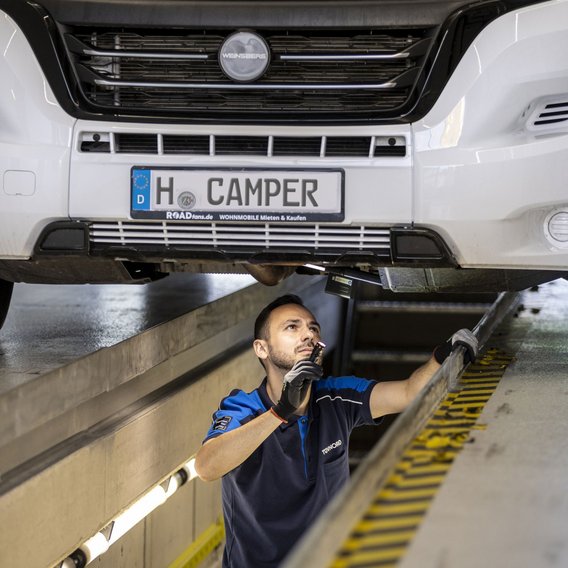
Prüfingenieur führt eine Unterbodeninspektion an einem Wohnmobil durch

MOT for motorhomes: How to stay safe on the road

What is checked during the MOT test? How can you best prepare your vehicle? Here you will find tips, deadlines and checklists for the MOT test for motorhomes and caravans.
The HU checklist for motorhomes
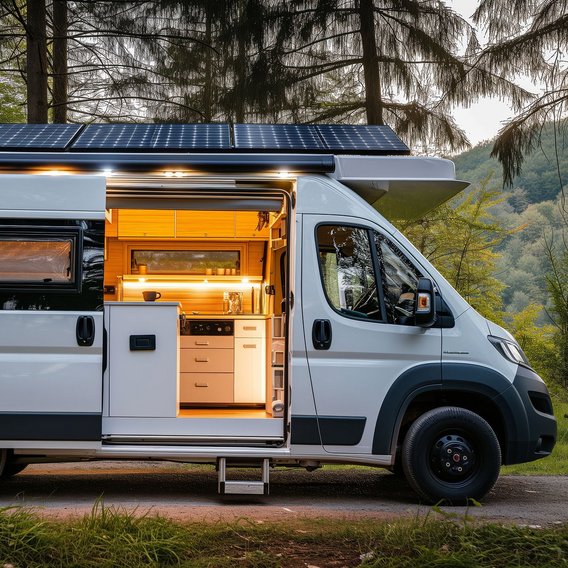
Camperausbau mit Solaranlage und moderner Innenausstattung

From a panel van to a camper van

Are you thinking of converting your van into a campervan? We’ll show you what you need to bear in mind when doing the conversion yourself – from planning right through to registration.
Go to the Camper Conversion Guide
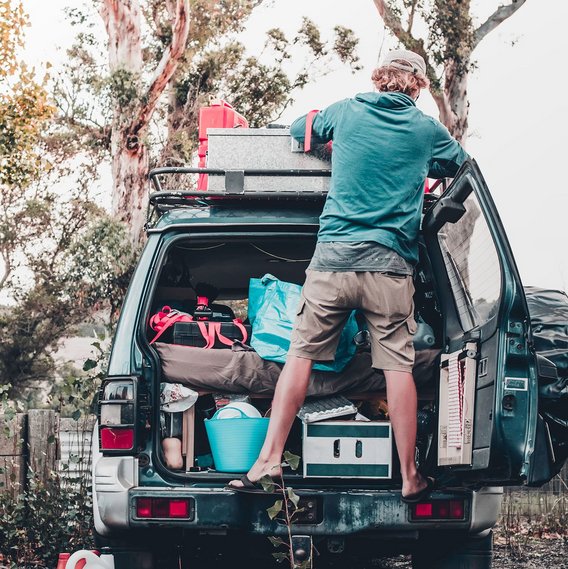
Beladen eines Wohnmobils für eine Reise

Payload, axle load & weight at a glance

Overloading can result in a fine – we explain how to calculate the permissible payload and distribute the weight effectively.
More about motorhome payload

Contact

We look forward to your enquiry!

TÜV NORD Mobilität

Guide and tips