Skip to content

Guides and tips

Rear-wheel drive in winter

Whether front-wheel, rear-wheel or all-wheel drive: winter is when you really see which drivetrain delivers. Whilst front-wheel drive ensures stability, rear-wheel drive excels on inclines – and all-wheel drive offers the best traction on snow and ice. However, good winter tyres and an active stability control system remain crucial for maximum safety.

Drive safely with rear-wheel drive
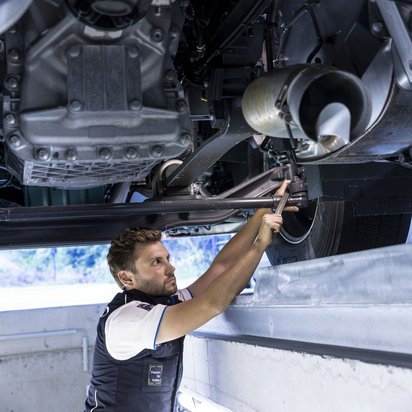

Prüfingenieur arbeitet am Unterboden eines Fahrzeugs an einer TÜV NORD Station

Which drive is the best choice in winter?

Whether it’s snow-covered country roads, slippery junctions or icy gradients – in winter, the right drive system is a crucial safety factor. But how do front-wheel, rear-wheel and all-wheel drive differ in winter road conditions? And which drive system suits your driving style? TÜV NORD explains the strengths and weaknesses of each system – including practical tips for safe driving in ice and snow.


Front-wheel drive in the snow

Advantage

Front-wheel drive provides excellent stability when accelerating, even on slippery roads.

Disadvantage

Front-wheel-drive vehicles struggle when starting on inclines, particularly when fully loaded. Braking stability on downhill bends also leaves something to be desired.


Rear-wheel drive in winter

Advantage

Rear-wheel-drive vehicles are easy to drive up hills, even when fully loaded. Rear-wheel drive also offers better traction when towing a trailer or caravan.


Disadvantage

One of the main drawbacks of this type of drive is undoubtedly that the rear wheels tend to ‘spin’ when accelerating on a slippery road surface.


All-wheel drive

Advantage

Permanent four-wheel drive ensures excellent stability even on slippery bends and good traction even on slippery inclines.

Disadvantage

Four-wheel drive is particularly worthwhile in regions with extreme winter conditions, as the purchase price of these vehicles is very high.

TÜV NORD Tip

For safe winter driving – regardless of the type of drive system – tyres bearing the "Alpine symbol" (a mountain pictogram with a snowflake) are essential. Vehicles fitted with an electronic stability programme (ESP or DSC) also offer greater stability and traction, even on roads with varying levels of grip.

What you should know

Frequently asked questions about drive types in winter

Yes – four-wheel drive generally increases the vehicle’s weight and friction losses in the drivetrain. On average, fuel consumption rises by 1–2 litres per 100 kilometres, or 10–15 per cent. This is particularly noticeable when four-wheel drive is permanently engaged.

On slippery surfaces, rear-wheel drive cars tend to skid (oversteer) – particularly when accelerating or cornering. A carefully loaded boot and a gentle driving style can help, as can a driver safety course.

Front-wheel drive pulls the car forward when accelerating – the extra weight of the engine above the drive axle provides relatively good traction on slippery roads. This generally makes it more comfortable and easier to control in corners than rear-wheel drive in wet or snowy conditions.

Rear-wheel drive in winter - travelling safely

Driving a rear-wheel-drive car in snow or on slippery roads requires extra care. Our tips will help you start, brake and manoeuvre safely – so you can enjoy a stress-free journey even in winter.

Optimum preparation for the cold season

Find out how to prepare your vehicle for winter conditions – from choosing the right tyres and using modern driver assistance systems to practical tips for driving safely in winter.
Winterreifen auf schneebedeckter Straße im Winter

Winter tyres: Suitable for your drive system

Whether your car has front-wheel, rear-wheel or all-wheel drive, choosing the right winter tyres is crucial for your safety. We’ll show you which tyres are best suited to your vehicle.
Find out more about winter tyres
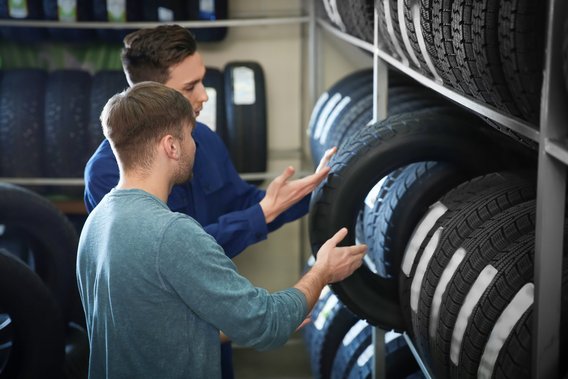
Zwei Personen diskutieren über die Auswahl von Autoreifen in einer Werkstatt

Buying tyres: tips for making the right choice

Whether your car has front-wheel, rear-wheel or all-wheel drive – choosing the right tyres is crucial for your safety. We’ll show you which tyres are best suited to your vehicle.
Find out more about buying tyres
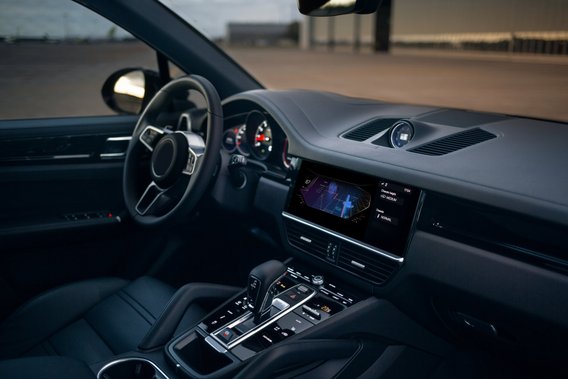
Innenraum eines modernen Fahrzeugs mit digitalem Display

Modern technology for winter roads

Driver assistance systems such as ESP or traction control can help you stay safe on the road, even in difficult conditions. We explain how they work.
Find out more about driver assistance systems

Contact

We look forward to your enquiry!

TÜV NORD Mobilität

Guide and tips