Guide and tips
By retrofitting a particulate filter, you not only make a contribution to environmental protection, but also secure long-term benefits. Older diesel vehicles without particulate filters in particular benefit from a retrofit so that they can continue to be driven in environmental zones without restrictions.

Particulate matter pollution in cities is a key environmental issue, with older diesel vehicles without particulate filters making a particularly significant contribution. To reduce pollutant emissions and ensure access to environmental zones, retrofitting a diesel particulate filter can make sense. It not only reduces emissions, but can also help to avoid impending driving bans. Find out here whether retrofitting is worthwhile for your vehicle, what requirements must be met and what funding options are available.
Why retrofitting makes sense:
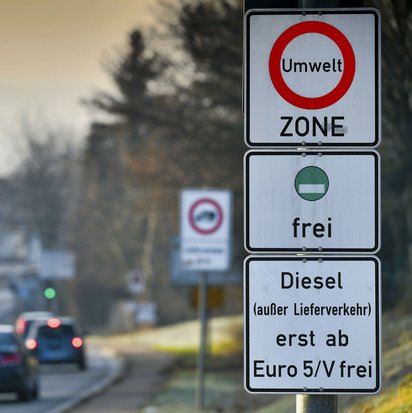
If you want to be fully mobile with your diesel, you should have a particulate filter on board. More and more local authorities are setting up environmental zones to improve air quality. You can only drive in these zones with a sticker if you have a particulate filter. Without a sticker, the most you will get is a fine and possibly additional points in Flensburg.
Particulate filters are not cheap; you can quickly be looking at 600 euros plus 50 euros for installation. But if your car is still worth a few thousand euros, the investment will pay off.
At the same time, you maintain the resale value of your car. In environmental zones, diesel vehicles without particulate filters can only be sold for far less than their current value.
For vehicles that are more than 5 years old or have travelled more than 80,000 km at the time of conversion, the oxidation catalytic converter must also be replaced. For cars that are not retrofitted or for new vehicles that do not comply with the Euro 5 value, car owners must also pay a penalty tax of 1.20 euros per 100 cm³.