Guides and tips
Before setting off on a skiing holiday, skis, snowboards and sledge should be stowed safely in the car, as otherwise they could pose a danger to passengers and other road users. We explain how to transport your equipment safely.
Check roof load rules now
Many skiing and snowboarding enthusiasts are already eagerly awaiting the winter holidays so they can finally hit the slopes. Most winter sports enthusiasts drive their own cars to their skiing holidays. Before setting off, it is important not only to check the vehicle, but also the bulky sports equipment such as
properly in the car. Otherwise, these can become dangerous projectiles for all passengers and the traffic behind.
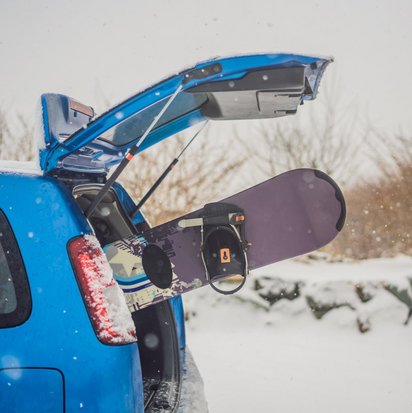
If you have enough space, you can easily transport sports equipment in the boot. However, you must have a partition net separating the boot from the passenger compartment; this prevents the load from being catapulted forwards with full force in the event of an emergency stop. It is best to secure the load further with lashing straps and then tie down the skis, snowboards and other items.
Some vehicles also have through-loading openings to the boot. This means that even long skis can fit in smaller cars. In this case, we recommend using ski bags to secure the skis in the through-loading opening.
If there isn’t enough space in the boot, many drivers simply place their skis inside the car between the seats. We strongly advise against this, as the skis can all too easily slide forwards and block the gear lever. Furthermore, passengers could cut themselves on the sharp edges of the skis. A good alternative is to transport skis and other equipment on the roof.
are now available to suit virtually every budget in specialist shops. However, a roof rack is essential for securing these transport options. Even if your vehicle does not have roof rails, you can still securely attach a basic roof rack. There are now roof rack systems that can be attached to the rain gutter or via clamps that hook into the door openings. Alternatively, there are also racks with magnetic or suction cup mounts.
How good are magnetic ski racks?
Magnetic or suction cup mounts are easy to fit, but can come loose just as easily. The suction cup must be attached to a completely flat surface, otherwise air will enter the vacuum. And the magnet loses its strength over time.
Roof boxes undoubtedly offer the greatest convenience, as they provide additional storage space for extra equipment such as ski boots, ski poles and so on, and can of course also be used on summer holidays. When buying one, make sure the box is lockable and has a GS safety mark. Thanks to their aerodynamically optimised shape, fuel consumption increases less than with other roof rack systems. However, the boxes take up a lot of space in your home’s basement or garage once they’ve been used.
When packing, ensure that the roof load specified in the vehicle’s owner’s manual is not exceeded. This is calculated based on the weight
Specialised ski roof racks or ski holders for a multi-purpose roof rack are more convenient and cost-effective than roof boxes. These are particularly suitable if you also wish to transport bicycles, surfboards or similar items in the summer. When purchasing, ensure that your skis fit into the intended rack – modern carving skis can be quite thick and do not fit into every rack. Make sure you secure the skis with the tips pointing backwards. To protect the skis, a ski bag is also recommended.
Before setting off, you should always check once again that the roof racks and secured items are properly secured. Use stopovers and breaks to check whether the load on the roof has come loose whilst driving. Warning! The increased weight and the altered centre of gravity affect the vehicle’s handling. Braking distances will be longer. Furthermore, the vehicle may lean more to one side when cornering. It is essential that you adjust the tyre pressure and, if necessary, the headlight alignment to account for the increased weight. A vehicle with a roof box consumes up to 1.5 litres of fuel per 100 kilometres – so keep an eye on the fuel gauge.
Never leave your roof luggage unattended during a stopover, as ski equipment on the roof is generally not insured. Comprehensive insurance does not cover items attached to the roof, as these are not permanently fixed to the car – this also applies to a locked roof box. And home contents insurance will only cover theft if the winter sports equipment was in the boot or if the vehicle, including the roof box, was parked in a locked garage.
Overloading is the biggest risk when driving in the mountains. We’ll show you how to calculate your roof load and install your roof rack system in a way that complies with the law.