Guides and tips
In autumn, the risk of collisions with wildlife increases significantly. Drivers should be particularly vigilant in the early morning and evening hours, at wildlife crossings, in areas bordering woods and fields, and during the mating season. On this page, you can find out how wildlife crossings are defined, which animal species are most commonly involved, and how best to prepare.
Request a wildlife damage appraisal now
In recent years, there have been more than 240,000 collisions with wildlife, around 3,000 of which resulted in personal injury.
On this page, you will find everything you need to know about wildlife crossing and wildlife-related accidents.
Read about how you can prepare for this as a driver and what to do in the event of a collision with wildlife. We offer useful tips on how to avoid accidents and provide information on how to respond correctly in an emergency.
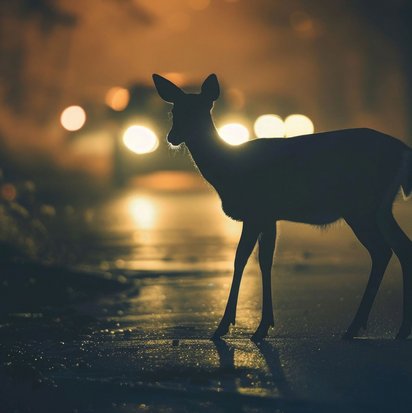
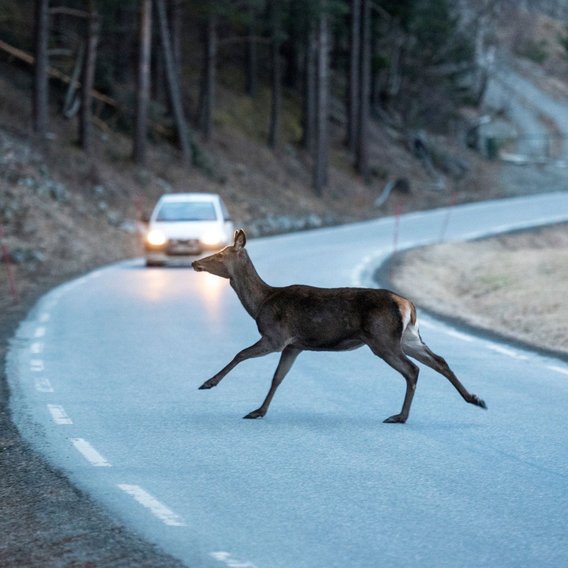
Wildlife crossings refer to wild animals crossing roads or paths, particularly in rural areas. This can pose a potential danger to motorists, as collisions with wild animals can lead to accidents.
In some regions, warning signs indicate potential wildlife crossings. There are also measures in place to prevent wildlife-related accidents, such as wildlife fences and special warning systems for motorists.
Have you been involved in an accident with a wild animal, such as
this is considered a collision with wildlife. The resulting damage is classified as wildlife damage. Incidentally, most collisions with wildlife in Germany involve a deer or a wild boar.
If, on the other hand, you hit a small animal that is not subject to hunting regulations, e.g.
this is not classified as a wildlife collision. The same applies to accidents involving other domestic animals, such as dogs, cats, sheep or cows.
In many areas where wildlife is likely to cross the road, special warning signs are put up to alert drivers to the potential danger posed by wild animals on the road.
These signs are designed to raise drivers’ awareness and encourage them to slow down and take extra care in order to avoid accidents involving wildlife.

Most collisions with wildlife occur in the evening and early morning hours, with the transition zones between woodland and open fields posing a particular risk. You should expect wildlife to cross the road frequently in these areas, as the animals move from the woodland to the fields to feed and then return to the safety of the woodland. During the mating season for roe deer in summer and for stags and wild boars in autumn and winter, their behaviour is unpredictable and therefore even more dangerous for you as a driver.
Incidentally, according to an analysis by the German Insurance Association (GDV), the risk of a collision with wildlife is unevenly distributed throughout the year: the danger is particularly high in April and May and from October to December.
Roe deer have their mating season from mid-July to early August. During these weeks, roe deer can often be seen in daylight, but are mainly active at dusk and at night. During this time, roe deer are particularly careless and can be spotted more frequently near roads.
For red deer, the rutting season lasts from September to the end of October. Red deer normally live in herds – though these are divided into herds of male stags and herds of female does. During the rutting season, the older males leave their herd and sometimes travel more than 100 kilometres in search of females.
The mating season for wild boars usually runs from November to January, followed by a gestation period of around four months, meaning that an average of six piglets are born in the spring. However, due to mild winters and abundant food sources, wild boars in the wild now mate almost all year round.
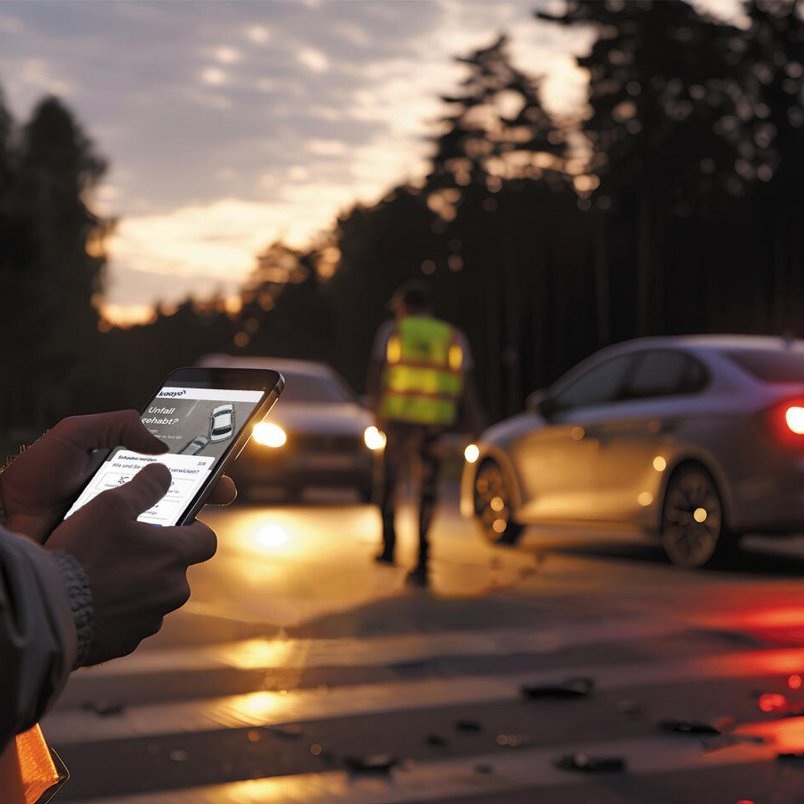
We’re here to help if you’re involved in an accident involving wildlife. Our experts will draw up your accident report – including for damage caused by wildlife – so you can get back on the road safely.
Partial comprehensive insurance generally covers damage to your own vehicle caused by a collision with wildlife. This typically includes damage resulting from collisions with wild animals such as wild boar, roe deer, red deer, foxes or hares.
Accidents involving birds are not covered by all insurance policies, whilst some insurers offer cover for accidents involving all animals, including pets.
If it cannot be proven that the damage to the vehicle was caused by a collision with wildlife or as a result of evasive or braking manoeuvres, comprehensive insurance may cover the costs. Please note that making a claim under comprehensive insurance will result in a downgrade to a less favourable no-claims bonus category.
Motor vehicle liability insurance covers, in the event of a collision with wildlife, only damage caused to other road users (so-called third parties) as a result of the collision. This also applies to damage to crash barriers, road signs or other objects within the hunter’s area of responsibility.
This rule applies regardless of whether the damage was caused by the collision with the wildlife or by an evasive manoeuvre. All other accident costs are not covered by motor vehicle liability insurance.
Please check the exact terms and conditions of the insurance policy, as cover may vary depending on the insurer and the policy.
Without an official certificate of a collision with wildlife (issued by the police or the hunting authority), partial comprehensive cover is not guaranteed, as the burden of proof lies with the vehicle owner.
A dead animal must only be secured at the roadside – it must not be taken to a car. Taking it away is considered poaching, even if there is no intention to use it.
Under no circumstances should you touch live wild animals – they may be aggressive or unpredictable due to stress. There is also a risk of infection.
A collision with wildlife often causes hidden damage. When settling a claim, don’t leave it to chance – rely on an impartial assessment.