Audit and expert opinion
The UMA (examination of the engine management/exhaust gas cleaning system) has been in place since 2006. The exhaust emissions test for motorbikes was introduced at the same time as the UMA. One goal is pursued here: The exhaust emission values must comply with the permissible legal limits.

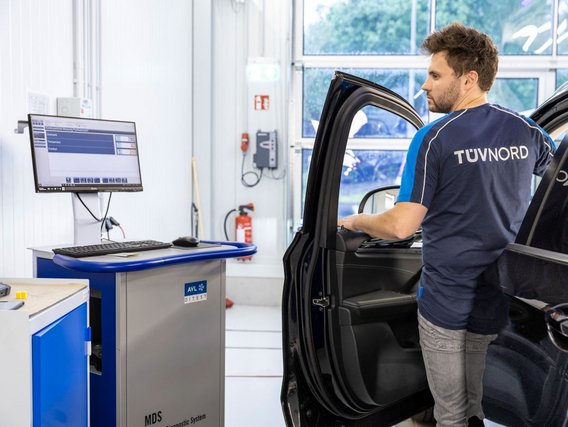
The technology is also subject to the changing times - from checking the ignition timing or the closing angle in the past to today's use of the latest IT and measurement technology using the vehicle's own electronic OBD interface (on-board diagnostics). In modern vehicles, tailpipe measurement is even dispensed with under certain circumstances.
Since 1 January 2010, the exhaust emissions test has been an integral part of the general inspection. Incidentally, the hexagonal emissions test sticker is no longer affixed to the front licence plate.
According to the 55th Amendment Ordinance to the StVZO, UMA (= inspection of the engine management and exhaust gas purification system) and GAP (gas system inspection for gas-powered vehicles) may be carried out at the earliest one month before the main inspection is carried out.
The text of the ordinance is interpreted in this respect as being precise to the month. This means that a provided test that is to be used by the inspector as part of their own main inspection may not be older than the month prior to the month in which the main inspection is carried out.

Since 1 January 2018, the so-called tailpipe measurement has also been mandatory again for vehicles with an OBD system during the emissions test.
For this measurement, the engine must first be brought up to operating temperature. In many cases, the engine temperature specified by the vehicle manufacturer is approx. 80 °C. The exact temperature is determined during the measurement in older vehicles using an oil temperature probe - and in newer vehicles by reading the coolant temperature via the OBD system.
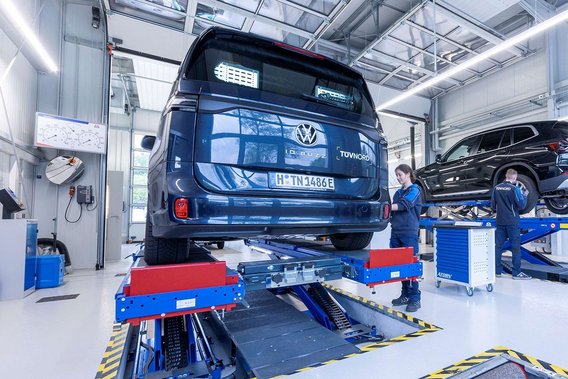
As part of the main inspection, TÜV NORD employees inspect the visible parts of the vehicle's mixture preparation and exhaust system for damage.
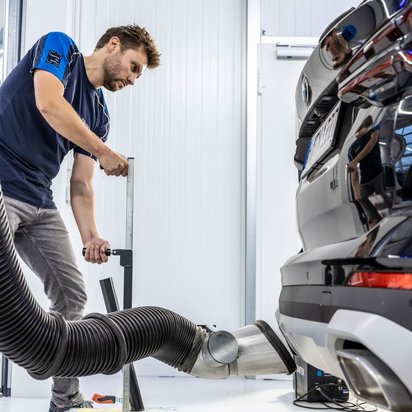
If the visual inspection was positive, a special exhaust gas tester is used to analyse various exhaust-relevant settings and values of the engine as well as the vehicle's pollutant emissions. The exhaust gas values at idling speed and in the increased speed range are determined and recorded.
Have your engine serviced regularly. This is good for the environment and helps to avoid unpleasant surprises during the emissions test. Bring your engine up to operating temperature yourself before the general inspection and use the TÜV NORD appointment service - then you will be on the road immediately and your vehicle will still be at the required temperature when we carry out the emissions test.
If you come to us with an engine temperature of only 40 or 50 °C or if the vehicle has been parked again directly before the MOT, the engine must first be brought up to operating temperature before the MOT. This usually takes between 5 and 15 minutes.