The energy transition requires the intelligent integration of electricity, heat, mobility and industry. TÜV NORD supports the safe and efficient implementation of sector-coupled energy systems – from feasibility studies and project support through to certification and commissioning.

Sector Coupling – Intelligent Integration of Energy Systems
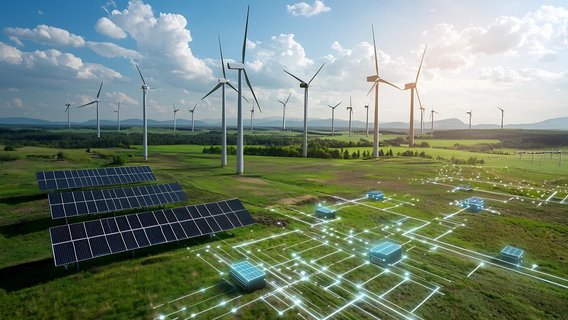
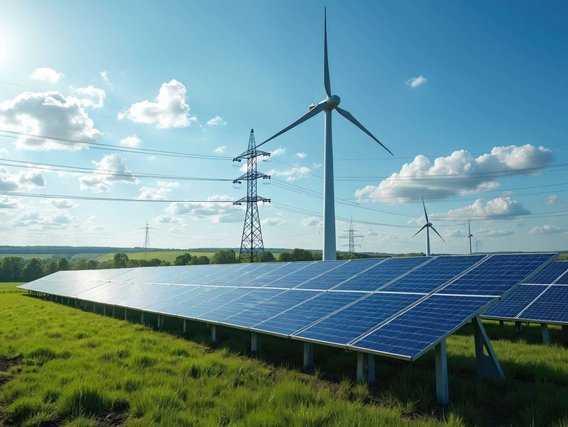
With the growing share of renewable energy from wind and photovoltaics, the demand for integrated and flexible energy systems is increasing. Sector coupling links the electricity, heat, mobility and industrial sectors into a connected overall system – enhancing security of supply, efficiency and climate neutrality.
TÜV NORD supports sector coupling projects across the entire value chain – from feasibility studies and system simulation to grid connection assessments, certification and commissioning. In doing so, we take into account all relevant standards, guidelines and statutory requirements – both nationally and internationally.
Our interdisciplinary expert teams combine expertise in electrical engineering, energy systems, process engineering, the hydrogen economy and digitalisation. This combination of technical depth and system-level understanding enables us to assess integrated energy systems in a safe, efficient and fully compliant manner.
In this way, we work with our clients to create the foundation for a secure, sustainable and climate-neutral energy future.

It requires stable systems that securely integrate electricity from wind, solar and storage into the grid while ensuring grid stability at all times.
TÜV NORD supports grid operators, energy utilities and project developers with technical consulting, assessment, certification and system evaluation. Our service portfolio includes, among other things, grid connection assessments, simulations for system optimisation and grid stability, power quality measurements, as well as safety and risk analyses for hybrid electricity systems.
Objective: Stable, compliant and secure electricity grids as the foundation for an interconnected and future-ready energy supply.

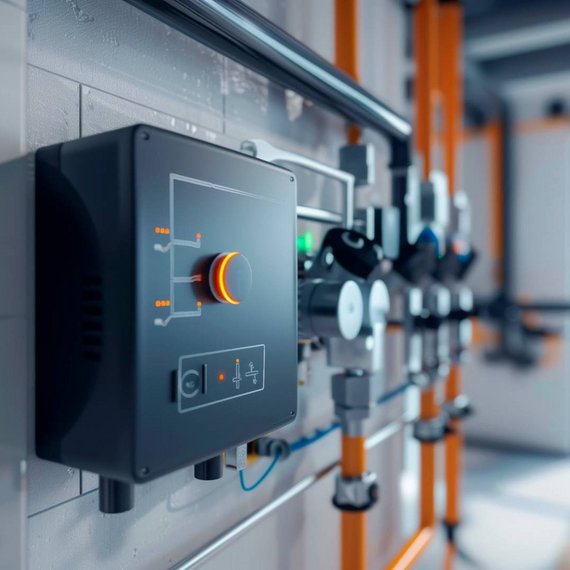
With technologies such as power-to-heat, heat pumps, and intelligent district heating networks, heat can increasingly be generated in a climate-neutral manner and efficiently integrated into energy systems.
TÜV NORD supports municipalities, energy utilities, and industrial companies in the planning, testing, and evaluation of sustainable heating systems. This includes the development of power-to-heat concepts and the deployment of modern heat pump systems, as well as transformation roadmaps and feasibility studies for municipal heat planning and the expansion of local and district heating networks.
In this way, we help to realize a sustainable, efficient, and low-emission heat supply that makes a decisive contribution to a holistic energy transition.

Through the increased use of electrical and hydrogen-based applications, industrial production processes can be progressively decarbonized and made more energy-efficient. In this way, industry makes an important contribution to the implementation of climate-neutral value chains.
TÜV NORD supports companies in linking different technologies to ensure the seamless integration of various sectors and in implementing safe, sustainable production systems. The focus is on power-to-industry solutions that intelligently combine electrical and hydrogen-based processes with heat and waste heat. In addition, we provide safety and conformity support for industrial plants, carry out energy and resource efficiency analyses, and support feasibility studies for hydrogen and CO₂ reduction projects. We also offer certifications and audits in the fields of sustainability, environmental protection, and occupational safety.
The goal is to develop efficient, safe, and low-CO₂ production processes that prepare industry for a sustainable and climate-neutral energy future.

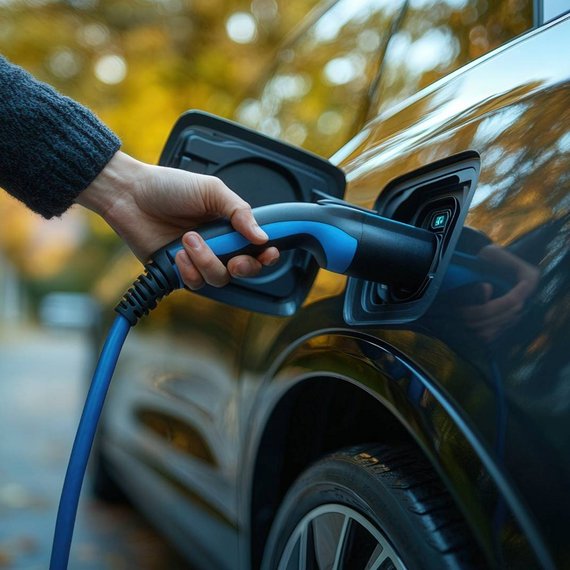
Within the framework of sector coupling, transport and energy supply are linked to enable the efficient use of renewable energy in the mobility sector—from electromobility and charging infrastructure to hydrogen-based mobility.
TÜV NORD makes a decisive contribution to the safe and standards-compliant implementation of modern mobility solutions. We support manufacturers, operators, and infrastructure projects throughout all phases—from planning and testing to operation.
Our service portfolio ranges from the assessment of power-to-mobility applications and the testing of charging stations, power supplies, and energy management systems to safety and permitting assessments for hydrogen refueling stations. In addition, we conduct cybersecurity audits in the field of charging and vehicle communication and provide certifications for systems and components in accordance with international standards.
This creates a safe, reliable, and climate-friendly mobility infrastructure that makes the transport sector an integral part of a connected energy future.

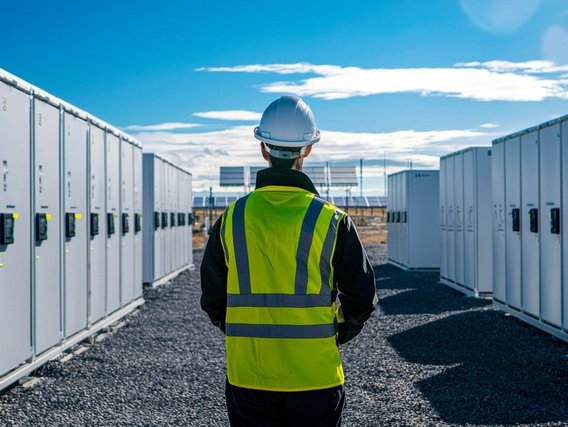
Energy storage systems are a central link between the electricity, heat, mobility, and industrial sectors. They enable the flexible use of renewable energy, balance grid fluctuations, and provide energy when it is needed. In doing so, they make a significant contribution to the stability and efficiency of modern energy systems.
TÜV NORD tests, assesses, and certifies battery storage systems, large-scale storage installations, hybrid storage solutions, and power-to-X applications in accordance with national and international standards. Our assessments cover, among other aspects, electrical safety, performance, grid compatibility, and fire protection—from development and grid connection through to operation.
By combining technical testing, simulations, and system certification, TÜV NORD ensures that storage solutions are operated in compliance with regulations, efficiently, and safely, and can be reliably integrated into energy parks—as an integral part of sector-coupled energy systems.
As a key component of modern energy systems—from individual storage units to hybrid energy parks—and as a core technology for a climate-neutral energy future, energy storage systems provide flexibility, security, and stability to the energy system.
Successful sector coupling requires comprehensive technological expertise, systems thinking, and digital competence. As an independent testing and knowledge partner, TÜV NORD stands for the highest standards of safety and sustainability and builds trust in the integrated energy systems of the future.
Ilona Dickschas
Head of Sector Coupling, TÜV NORD EnSys
Sector coupling connects the electricity, heat, mobility and industrial sectors through technical and digital solutions. The objective is to use renewable energy more efficiently, reduce emissions and increase the flexibility of the energy system.
Sector coupling is relevant for all stakeholders involved in generating, distributing, using or managing energy – in particular energy utilities and network operators, municipal utilities and local authorities, industrial companies, as well as project developers and technology providers. It offers significant potential for efficiency gains, CO₂ reduction and new business models.
Sector coupling projects are technically complex and require the integration of different systems and infrastructures. In addition, they involve stringent requirements in terms of standards and regulation, investment, permitting, as well as digitalisation, safety and compliance obligations.
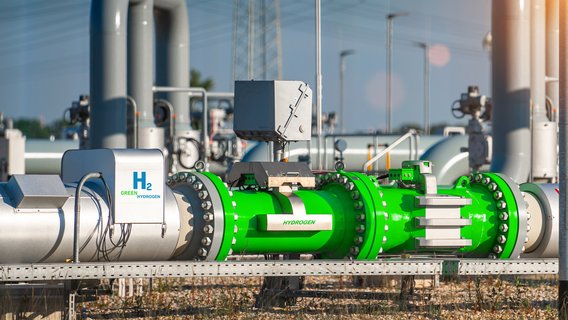
Hydrogen makes renewable electricity storable and transportable, thereby linking the electricity, heat, mobility and industrial sectors. It is produced, for example, through electrolysis using surplus electricity and can then be stored, transported or further processed – such as into synthetic fuels.
TÜV NORD supports, assesses and certifies sector-coupled energy systems – from initial concept and planning through to operation. This includes, among other things, technical testing and certification, system simulations, support throughout permitting processes, as well as safety, cybersecurity and recycling concepts across the entire lifecycle. In this way, TÜV NORD ensures that sector-coupled systems are implemented safely, efficiently, in full compliance with regulations and in a sustainable manner.
We support, test, and certify sector-coupled energy systems in accordance with all relevant VDE, IEC, DIN, and ISO standards.
Whether power-to-X plants, hydrogen systems, or hybrid energy systems, we support you from feasibility analysis and grid connection assessments through to safety and conformity verification.
Our interdisciplinary expert teams combine experience in electrical engineering, process engineering, the hydrogen economy, and digitalization. In this way, we assess complex sector-coupling systems safely, efficiently, and in full compliance with applicable standards and regulations.
With TÜV NORD, you secure technical quality, regulatory certainty, and trust—for the successful implementation of sector-coupled systems in the energy system of the future.