Skip to content

Feasibility Studies for the Energy Market

With independent feasibility studies, TÜV NORD evaluates the location, permitting requirements, safety aspects, and risks of your energy projects — enabling clear decision-making and supporting reliable, efficient project planning.

Windpark und Photovoltaikanlage mit digital visualisierter Netzintegration in ländlicher Umgebung.

Sound Foundations for Investment and Site Decisions

Energy projects—particularly hydrogen and hydrogen infrastructure, Power-to-X, energy storage, renewable generation, and grid-related infrastructure—face significant economic, regulatory, and time pressures. Whether a project is feasible depends largely on site-specific factors, permitting requirements, safety considerations, and market risks.

TÜV NORD prepares independent feasibility studies that systematically evaluate these key influencing factors. We analyse site-specific conditions and existing infrastructure, review permitting-related requirements and necessary documentation, and assess safety aspects such as hazardous substances, safety distances, and site-specific risks.

The result: a clear, prioritised, and transparent project assessment with recommendations for the next steps—providing a robust basis for planning, permitting, and investment decisions.

Your Benefits

  • Investment Confidence Through Site Clarity
    Receive a clear and well-founded assessment of all site-specific opportunities, risks, and critical boundary conditions—providing a reliable basis for strategic investment decisions.
  • Planning Certainty for Permitting and Implementation
    By identifying permitting-relevant issues, required documentation, and potential bottlenecks at an early stage, you minimise delays and increase the likelihood of success in the permitting process.
  • Risk Reduction Across All Project Phases
    Our structured analysis of safety requirements, safety distances, technical design aspects, and inspection obligations reduces technical, organisational, and regulatory risks already in the early stages of the project.
  • Faster and Better Decision-Making
    With transparent methodologies, clearly presented results, and prioritised recommendations for action, you accelerate internal decision processes and strengthen overall project reliability.

Fields of Application

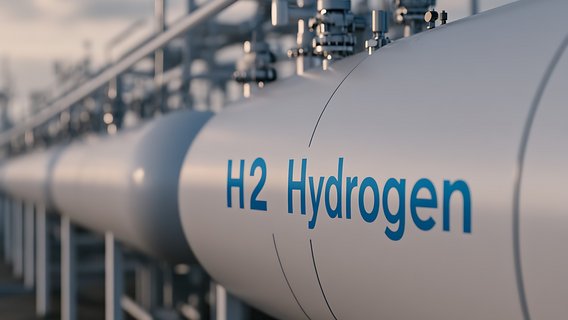
Nahaufnahme einer Wasserstoff-Pipeline mit der Aufschrift "H2 Hydrogen" im Industrieumfeld

Hydrogen, Electrolysis and Power-to-X

Assessment of site conditions, infrastructure, permitting requirements, and safety aspects for hydrogen and Power-to-X projects.
Solaranlage und Energiespeicher

Energy and Battery Storage

Assessment of site suitability, safety distances, and required documentation for energy storage solutions and energy storage systems.
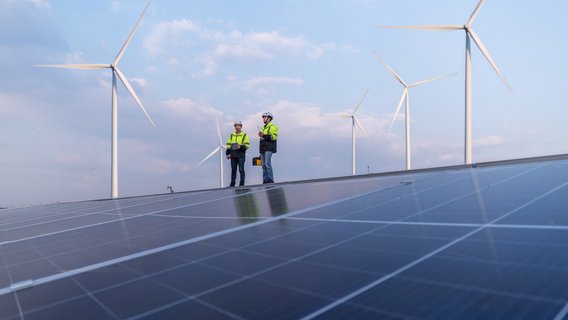
Zwei TÜV NORD-Ingenieure prüfen Solarmodule vor Windrädern unter blauem Himmel

Renewable Generation and Hybrid Concepts

Analysis of site factors, environmental conditions, and land availability for PV, wind, and hybrid energy projects.
Solarpanels, Windräder und Stromleitungen bei Sonnenuntergang – erneuerbare Energien in der Landschaft

Grid Infrastructure

Assessment of grid connection, interfaces, routing corridors, and associated risks for reliable power grids and energy distribution systems.

Scope of the Feasibility Study

We evaluate the technical suitability of a site based on project-specific criteria, including:

  • Soil bearing capacity and structural engineering conditions
  • Extreme weather and environmental influences (e.g. wind, flooding, temperature)
  • Environmental receptors and environmental framework conditions
  • Land requirements and site availability
  • Decommissioning aspects, contaminated land, and potential legacy issues
  • Transport routes, logistics, and site accessibility
  • Existing and required infrastructure connections (energy supply, utilities, transport, grids, and pipelines)

Result: A clear assessment of site suitability, including the key prerequisites for project development.

We structure permitting-related requirements and derive the next steps for project planning, including:

  • Quantity thresholds and classification of relevant material and media flows
  • Major accident relevance and surrounding area analysis (e.g. proximity to major accident establishments)
  • Regulatory classification of the installation
  • Initial assessment under the Federal Immission Control Act (BImSchG), e.g. potential application of § 9a BImSchG

Note: This does not constitute legal advice; it is a technical preliminary assessment.

Result: A structured overview of permitting-relevant topics and a reliable roadmap for further clarification.

We identify which studies and technical documentation are typically required or advisable, including:

  • Environmental impacts and immission control
  • Land use and spatial planning considerations
  • Safety-related classification
  • Technology maturity (operational limits, availability, and reference projects)

Result: A prioritised list of required documentation serving as a foundation for project planning and permitting.

We assess safety-relevant aspects already in the early project phase, including:

  • Handling of hazardous substances (storage, handling, and processes)
  • Safety distances and protection concepts
  • Site-specific risk analysis (interfaces, surrounding risks, and interactions)
  • Identification of safety-relevant design aspects (e.g. system design and protective functions)
  • Identification of required inspections and technical documentation

Result: A transparent risk profile with prioritised mitigation measures and a structured verification strategy.

For complex projects, we provide system-level analyses to support planning and optimisation, including:

  • Modelling of the overall system (generation, consumers, storage, and grids)
  • Simulation of operating modes and load cases
  • Scenario comparison and performance scaling
  • Techno-economic optimisation (cost–benefit evaluation over time)

Result: Robust scenarios, key performance indicators, and a solid basis for informed decision-making.

At the conclusion of the study, you receive a clear and transparent overall assessment of the site and the project, including:

  • Evaluation methodology (e.g. SWOT analysis, evaluation matrix, traffic light assessment)
  • Consolidation of all findings from site assessment, permitting, safety, market, and system analyses (depending on the scope)
  • Prioritised recommendations for action and next steps, including dependencies and identified requirements

Result: A structured and well-founded overall assessment supporting planning, permitting, and investment decisions.

Frequently asked questions

A feasibility study is particularly valuable in the early to intermediate phases of a project—that is, once site options, technical concepts, or implementation approaches need to be evaluated. It provides a robust basis for investment decisions, as well as for subsequent permitting planning and technical implementation.

No. The preliminary assessment is not legal advice, but a technical and structured analysis of permitting-relevant requirements. It identifies which documentation, classifications, or further in-depth assessments are required. The legal evaluation is carried out exclusively by authorised parties (e.g. lawyers or authorities).

Yes. The scope and depth of the feasibility study are modular and flexible. Optional modules such as market and acceptance analyses, system modelling, energy flow simulations, or techno-economic evaluations can be integrated—depending on the project objective, maturity level, technology pathway, and data availability.

Why TÜV NORD

TÜV NORD stands for independence, safety, and trust. As a neutral partner, we assess site and project risks in a structured, transparent, and comprehensible manner. Through our technical expertise and many years of experience, we provide a robust basis for decision-making—for safe, economically viable, and future-proof energy projects.

Contact Us

In the initial consultation, we clarify the project objectives, site(s), technology pathway, and the desired level of assessment. You will then receive a structured approach with clearly defined deliverables.

TÜV NORD EnSys GmbH & Co. KG | Sektorkopplung