Skip to content

Guide and tips

AdBlue

AdBlue is essential for modern diesels with SCR catalytic converters: it converts harmful nitrogen oxides into harmless water vapour and nitrogen. Around ten per cent of passenger cars in Germany (mainly Euro 6) are affected, as well as almost all trucks, agricultural machinery and vehicles used by the police, emergency services and public transport.

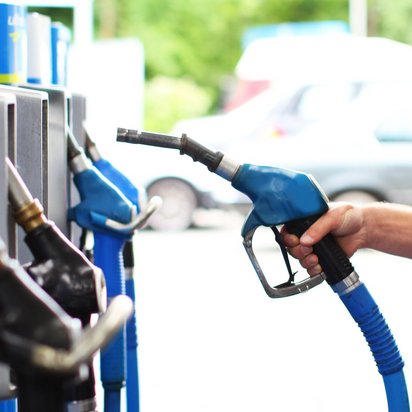
Hand hält Zapfpistole an einer Tankstelle

A clean solution: How AdBlue works

There is no threat of a general standstill, but if the tank is empty, diesel engines with SCR systems come to a standstill. To ensure that nobody gets the idea of driving without the prescribed urea, manufacturers have integrated various escalation stages into their on-board systems across all vehicle brands:

  • If the tank runs dry while driving, the on-board electronics initially switch to "creep mode" so that you can at least get to the next petrol station with reduced power.
  • However, once the engine is switched off, it can no longer be started, even though everything is technically in order.

There is a good reason for these penalties: without AdBlue, the diesels no longer fulfil the legally prescribed emissions standard and may even be on the road as Euro 0 vehicles.

Blue fuel for a green conscience

AdBlue drives for the environment: In selective catalytic reduction, the solution reduces nitrogen oxide emissions from compression-ignition engines by up to 90 per cent. This happens in three steps:

  • AdBlue is injected into the exhaust gas stream from an extra tank while the vehicle is travelling.
  • The heat causes the urea to decompose into ammonia.
  • This in turn reacts with the nitrogen oxides in the SCR catalytic converter and converts them into harmless nitrogen and water vapour.

Initially, it was mainly commercial vehicles with SCR technology and AdBlue that were on the road. When the Euro 6 standard demanded a further reduction in nitrogen oxide emissions in Europe in September 2014, car manufacturers were faced with a problem. New cars are trimmed for efficiency and should consume as little fuel as possible. However, the better the combustion process runs, the higher the temperatures and the more nitrogen oxides are formed as a result.

SCR catalytic converters are the solution and have been used in cars ever since. The system makes it possible for diesels to comply with the prescribed maximum emissions of 8 grams of nitrogen oxide per 100 kilometres and still be fuel-efficient on the road.
Making AdBlue yourself and other creative “alternatives”

Urea and distilled water are the only components of the shimmering blue liquid called AdBlue - so surely you should be able to make the mixture yourself or at least fall back on cheap no-name products? Please don't! This can have serious consequences for the vehicle and lead to costly repairs.

Urine is not a solution

The synthetically produced liquid consists of 32.5 per cent high-purity urea. But even if the name suggests it, the synthetic product has little in common with pee: urine consists of 95 per cent water. The remaining five per cent are metabolic products, organic acids, hormones, water-soluble vitamins, organic and inorganic salts and dyes that have no place in the SCR catalytic converter. Urea is only present in urine in very low concentrations. It is impossible to filter out the amount required for nitrogen oxide conversion.

No no-name products

AdBlue is a registered trademark of the German Association of the Automotive Industry (VDA). The protected trade name stands for the urea AUS 32, but even if you think you can save costs with a no-name product, this is not an alternative. Car manufacturers expressly warn against this in the operating instructions, as the use of inferior diesel additives can damage the SCR catalytic converter and other important components - and the manufacturer's warranty of the car is then also jeopardised.

Only products with the official AdBlue label guarantee that they fulfil the ISO 22241-1 to 22241-4 standards. These have replaced the DIN 70070 standard, which was previously the standard for the synthetic solution.

“AdBlue off” is not a trivial offense

Deactivating AdBlue is illegal in Europe - even if it is technically possible. However, it is not a trivial offence: tampering is a serious offence against the environment and is punishable by heavy fines. In addition, tampering with the system invalidates the operating licence. Anyone who switches off AdBlue is harming the environment, themselves and others.

What you should know

Frequently asked questions about AdBlue

  • Until the liquid is in the container on the shelves, significantly more work steps are required than simply topping up the fuel stocks at a petrol station. This leads to higher costs.
  • In addition, the plastic bottles are not only more expensive, but are also critical for environmental reasons. Filling up at the petrol pump is therefore not only easy on your wallet, but also on the environment.

No, you can dispose of empty bottles in your household waste without any problems. However, as the highly concentrated urea is potentially hazardous to water, you should take large quantities to a recycling centre. Inhalation is also not advisable, as the synthetic substance can irritate the bronchial tubes, as well as the skin and eyes. In the event of contact, you should wash off the liquid immediately with plenty of water. And if anything drips onto the vehicle, it is also advisable to remove the solution quickly, as it has a corrosive effect.

Fuel consumption depends heavily on your own driving style, the model and traffic conditions. According to the manufacturer, diesel cars consume around 1 to 1.5 litres per 1,000 kilometres. If the warning light flashes, you usually still have a buffer of 2,000 kilometres until the tank is completely empty. But then it's high time ...

When you are on the road, the most convenient way to locate an AdBlue filling station is to use an app. You can find the best price for the blue additive with apps from independent providers.

Trying to simply fill the tank with water or dilute the bluish liquid with it may outwit the on-board system in the short term. However, this is definitely not advisable. Even with distilled water, the SCR system may malfunction - and then the manufacturer's warranty may no longer apply.

The manufacturers have usually dimensioned AdBlue tanks so that one filling lasts until the next inspection, so that the tank can be conveniently refilled in the workshop. However, the diesel cleaner can also be refilled on your own - this is not only cheaper, but also easier.

  • Find a tank: AdBlue has its own tank, which can usually be found next to the fuel filler neck, but is occasionally hidden in the boot or engine compartment. The exact location can be found in the vehicle's owner's manual.
  • Find a petrol station: There you can conveniently tap the urea at the pump. But please do not use lorry pumps, as the flow rate is too high here - unless you have a suitable adapter.
  • The alternative: Filling the extra tank for the diesel cleaner from the canister is just as easy as topping up the wiper fluid.
  • Switch on the ignition: But please do not start immediately. After refuelling, you must wait briefly until the on-board computer has recognised and confirmed the new AdBlue. You can then continue driving as usual.

Topping up the company's own stores with AdBlue for the coming years is also not an alternative - quite apart from the social aspect: although the product has a shelf life of at least one year, it then begins to decompose. It then no longer fulfils its purpose and can even damage the technology. However, there is nothing wrong with a few extra litres in the cellar, boot or garage. The liquid should be stored in a dark, well-ventilated place and protected from temperatures above 30 degrees. The ideal storage temperature is between -5 and 20 degrees.

Kontakt

Wir freuen uns auf Ihre Anfrage!