Guide and tips
The battery of an electric car loses performance with increasing utilisation. On the one hand, it ages through charging and discharging processes themselves (technical term: cyclical) and on the other hand through time (calendrical). You can increase the longevity of the battery with a few tricks.

Similar to smartphones, electric vehicle batteries also lose some of their performance over time.
One of the reasons for this is metallic compounds that accumulate on the electrode in the lithium (known as dendrites), making it more difficult to build up voltage over time. The loss of active material also leads to a reduction in overall capacity.
Unfavourable conditions, e.g. frequent fast charging at low temperatures, lead to metallic lithium being deposited in the battery, which can significantly reduce its storage capacity in the long term.
The average service life of a battery, i.e. the time until the remaining capacity falls below 70%, is around eight to ten years.
High-performance lithium-ion batteries last at least 1,000 complete charging cycles. This means that with a battery capacity of 60 kWh and an assumed consumption of 20 kWh per 100 km, they will last for at least 300,000 km. In reality, batteries last significantly longer, as the car is not usually driven completely empty and fully charged, but is charged in the middle. This extends the battery life due to the lower load.
How quickly a new battery ages and thus loses value depends on several factors: Driving style, the number of fast charging processes or large temperature fluctuations put a strain on modern batteries.
As the driver of an electric car, you therefore have a significant influence on how long the battery can be used.
The basic rule is:
If possible, charge before setting off. If charging is delayed overnight, programme the charging process so that the battery is full immediately before setting off. This means that you can start with warm batteries and your energy consumption is lower due to appropriate conditioning.
Charge directly after the journey. This ensures that the battery is still at operating temperature. This shortens the charging time and reduces charging losses, especially in winter.
The more extreme the outside temperature, the faster the battery ages. Try to avoid temperature fluctuations, such as extreme summer heat or winter cold, as far as possible.
The higher the energy requirement, the greater the load on the vehicle battery. This leads to changes inside the battery and the capacity decreases. In addition, the battery discharges faster at maximum speed, which leads to additional charging cycles.
As with vehicles with a combustion engine, the same applies to electric cars: regular and professional maintenance extends the service life. An electric car requires less maintenance than a conventional car, as there are fewer wear parts. Nevertheless, you should have your vehicle checked and serviced by a specialist workshop for electric cars every year or according to the manufacturer's specifications.
When inspecting an electric car, great attention is paid to the maintenance of the battery - the most important and most expensive component.
The greater the difference between the state before and after charging, the more the vehicle battery ages. The ageing of the vehicle battery is favoured if the charging stroke (difference before and after charging) is particularly large. Fast charging therefore shortens the service life of the battery.
Depending on the thermal management, fast charging can lead to very high temperatures in the battery after a while, which can lead to the build-up of metallic lithium on the anode.
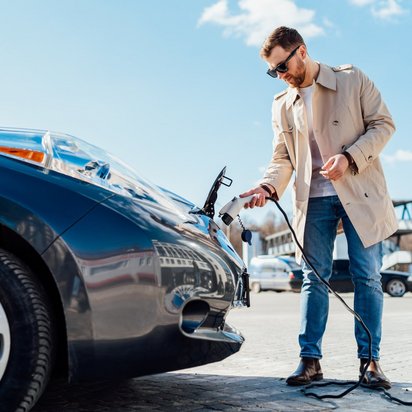
How to charge the battery of your electric car correctly:

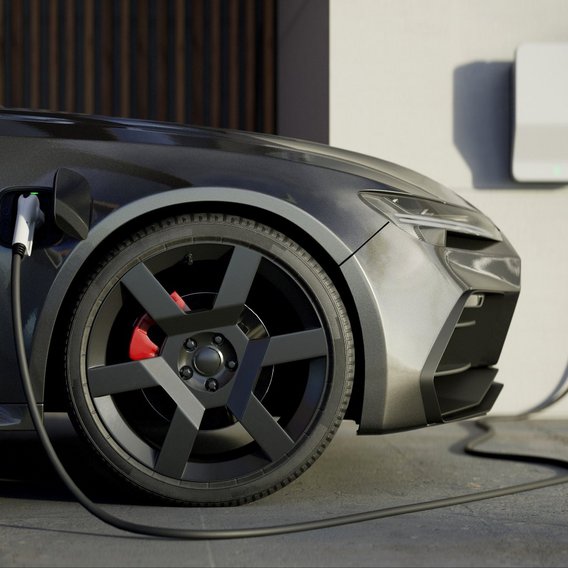
Many e-cars charge at home or at work, which makes sense as you spend a few hours there anyway and can easily charge the car in the meantime. Although it is possible to plug an electric car into a household socket, this is not quick. An electric car with a 41 kW battery would take around 21 hours to charge. Household sockets are therefore by no means a permanent solution. We therefore recommend a wallbox, which charges faster and is easier to install thanks to the German Condominium Modernisation Act (WEMoG).
An 11 kW wallbox is sufficient in most cases. Higher outputs must be authorised by the grid operator. The cost of a private charging station can vary from 500 euros to 2500 euros depending on the equipment. There are also the connection costs.
Without your own wallbox, there are over 108,000 public charging points available across Germany, around 20% of which are fast chargers. Many supermarkets and DIY stores also offer charging facilities. The number of charging points is set to rise to one million by 2030.