Guide and tips
New rules for drivers in 2026
New rules and changes for drivers are also on the horizon in 2026. We have summarised the most important things for you for the next twelve months.

Guide and tips
New rules and changes for drivers are also on the horizon in 2026. We have summarised the most important things for you for the next twelve months.
Vehicles with a blue sticker must undergo a general inspection in 2026. After a successful inspection, they will receive a brown sticker and will be due again in 2028. This applies to vehicles with a two-year inspection interval. The sticker shows the month of the inspection and the year in which the next general inspection is due. The colour of the sticker indicates the year of the next inspection from a distance.
The order of the sticker colours is
To make sure you don't miss your appointment this year, we offer a free MOT appointment reminder. Simply enter the dates and receive an automatic reminder.
All driving licences must be replaced with the new EU driving licence by 19 January 2033. This licence is valid for 15 years and is forgery-proof.
To ensure that drivers spend as little time as possible in the waiting room and do not all go to the driving licence authority or driving licence office on the last possible day, the exchange will take place in various stages:
From 2026, the exchange period is based exclusively on the year of issue of the driving licence. In concrete terms, this means that if your current driving licence was issued between 1999 and 2001, you must exchange it by 19 January 2026 at the latest at the relevant driving licence office, driving licence authority or the citizens' office at your current place of residence.
Exception: If you were born before 1953 , you do not have to exchange your driving licence - regardless of whether it is a paper or cheque card licence and regardless of the year of issue - until 19 January 2033 .
You will need
There is also a fee of approx. 25 euros*. There may also be additional costs for sending the new driving licence.
If the old paper driving licence was not issued by the authority of your current place of residence, you will need a so-called index card copy from the authority that originally issued it. You can apply for this by post, telephone or online and have it sent to the current driving licence office.
* A fee is charged for this in accordance with the "Gebührenordnung für Maßnahmen im Straßenverkehr (GebOSt)".
In 2026, car insurance will become more expensive for around six million drivers as the German Insurance Association (GDV) has introduced new type classes.
At the same time, 5.5 million vehicle owners will benefit from more favourable classifications.
For around 31.7 million, insurance will remain unchanged. The type classes are based on the damage and repair costs of the respective car models.
Why does the type class influence the amount of my insurance?
The type class is based on GDV statistics on damage and accidents involving around 33,000 vehicle models. Few claims mean a low type class and cheaper insurance. Many claims lead to a higher type class and more expensive premiums.
The GDV classification is non-binding, but is usually adopted by insurers. In addition to the type class, factors such as the registration district also play a role in the premium.
The federal government has extended the vehicle tax exemption for electric cars registered after 31 December 2025 by 5 years until 2035. The concession applies to all electric cars that are registered for the first time by 31 December 2030. The tax exemption for electric cars registered before 2025 has also been extended. It applies for a maximum of ten years from registration.
From 2026, vehicle tax may no longer be paid in instalments. Instead, the tax amount must be paid in full in advance. This regulation applies to all vehicles registered in Germany without exception.
If the insurance premium increases but the benefits remain the same, a special right of cancellation applies.
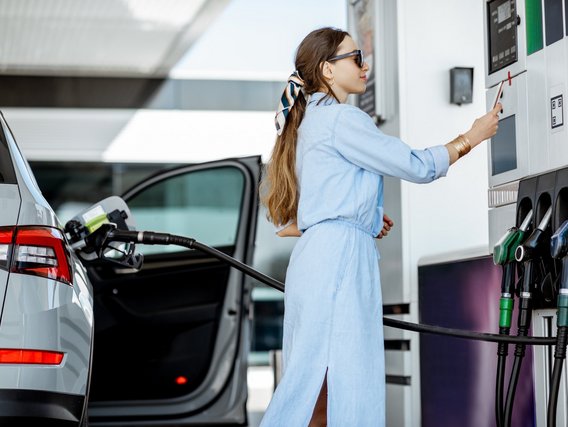
The CO₂ tax in Germany will be raised again from 2026. This measure is part of the German government's strategy to reduce CO₂ emissions and achieve its climate targets.
The CO₂ surcharge will initially be between 55 and 65 euros (currently 55 euros) per tonne. The price of a litre of petrol could rise by around 2.85 cents and a litre of diesel by around 3.19 cents.
Relief measure: commuter allowance to be increased
From 1 January 2026, the commuter allowance will be increased to 38 cents from the first kilometre, regardless of whether it is travelled by bicycle, public transport or car. It applies to a single journey to work. In this way, the German government wants to reduce the tax burden on commuters more than before.
Tips on how you can save fuel when travelling:
From January 2026, the second stage of the Euro 6e emissions standard will come into force for newly registered passenger cars. This standard is an intermediate step towards Euro 7. From 29 November 2026, newly developed passenger cars (with new type approval) must comply with the Euro 7 standard. Euro 7 will apply to all new registrations from the end of 2027.
The Euro 7 standard requires more precise measurement of ultra-fine particles and takes into account tyre and brake wear for the first time. Limit values for abrasion will be introduced from 2030.
For electric cars and plug-in hybrids, there are specifications for the durability of traction batteries for the first time. After five years or 100,000 kilometres, the battery must retain at least 80% of its original capacity. After eight years or 160,000 kilometres, the capacity must not fall below 72%.
eCall is the European emergency call system for cars. It is installed in every new car and is triggered either at the touch of a button or automatically when the vehicle's sensors register an accident.
From 2026, all newly registered cars in the EU must have a modern emergency call system. The "Next Generation eCall" replaces the old technology, which previously ran via the outdated 2G and 3G mobile phone standards. The changeover will take place gradually.
From 1 January 2026, the new system must be installed in all newly developed cars and light vans (up to 3.5 tonnes). Without the eCall system, a vehicle will no longer receive type approval. From 1 January 2027, no new vehicle may be registered without the Next Generation eCall.
There is no obligation to retrofit older vehicles with the new emergency call system.
From 7 July 2026, additional assistance systems will be mandatory for the first registration of new passenger cars and light commercial vehicles (M1, N1):