Skip to content

Guides and tips

Scooter

Scooters are a flexible and affordable alternative to cars. To ensure you can travel safely at all times, we offer bespoke inspection services tailored to your scooter. TÜV NORD Mobilität is your reliable partner for MOT tests, modifications and expert reports relating to your scooter.

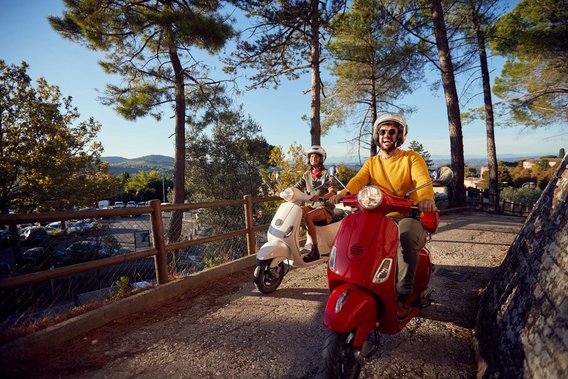
Zwei Personen fahren auf Motorrollern durch eine landschaftliche Umgebung

Safe scooter riding in any situation

They have always been a familiar sight on the streets of southern European cities, but the fascination with scooters is now taking hold in Germany too. In urban centres such as Berlin, Cologne, Hamburg and Leipzig in particular, more and more people are switching to scooters.

No wonder: in the hustle and bustle of city traffic, these little speedsters are not only practical, manoeuvrable and comparatively cheap – when the sun is shining, riding them is guaranteed fun.

Riding a scooter in windy conditions

  • Every machine reacts differently in windy conditions. Crosswinds, headwinds and gusts are particularly unpleasant when riding a scooter.
  • As a general rule: reduce your speed and present as little surface area as possible.

Riding a scooter in the rain

It isn’t exactly pleasant, but riding a scooter in the rain isn’t a problem. The key is having the right equipment: a helmet with an anti-fog visor or double-layer visor ensures good visibility.

Gloves with rubber nubs, which push the raindrops off the visor like a windscreen wiper, are also extremely helpful. You’ll also need to adjust your riding style, as riding on wet roads can quickly turn into a slippery business.

Riding a scooter with a passenger

If a passenger is riding on the scooter, the handling, performance and braking behaviour change fundamentally, as there is now significantly more weight on the rear wheel.

A few practice laps are recommended before the first ride on public roads. If the passenger is riding a motorised two-wheeler for the first time, it helps to briefly explain the scooter and how it behaves whilst riding beforehand.
Scooters: classes, types, and licenses

Although the appearance of these nimble little runabouts varies considerably, the open-knee design – that is, the absence of a fuel tank between the legs – is still considered the key visual difference from their bigger brother, the motorbike.

However, heavy motorcycles may only be ridden with an ‘open’ motorcycle licence (A). In contrast, a licence for a motor scooter is easy and inexpensive to obtain, as the vast majority of vehicles fall into the small and light motorcycle categories.

Find out more about the difference between small and light motorcycles, or the difference between mopeds and scooters:

50cc scooters - mopeds

  • Mopeds have a maximum engine capacity of 50 cm³, a power output of up to 4 kW and are limited to a maximum speed of 45 km/h.
  • They are not subject to road tax and do not require regular MOT testing, unless the moped is designed to travel faster than 45 km/h – in which case an MOT test is mandatory every two years.
  • The law requires a helmet and at least third-party liability insurance for mopeds. The insurance sticker must be renewed every year by 1 March.
  • You are permitted to ride a moped with a Class B driving licence. However, you must at least hold an AM driving licence.
  • The minimum age for riding a light moped is 15.

125cc scooters - light motorcycles (including trikes and quads)

  • A light motorcycle has an engine capacity of more than 50 cm³ but no more than 125 cm³. Its power output must not exceed 11 kW. This means that more than 15 hp is not permitted – but a top speed of 110 km/h is still possible.
  • Light motorcycles are not subject to road tax.
  • Insurance is compulsory for light motorcycles, as is wearing a helmet whilst riding.
  • Motorcycles with an engine capacity of more than 50 cm³ must undergo a general inspection every two years.
  • To ride a light motorcycle, you need an A1 driving licence or the B196 licence extension.
  • The rider must be at least 16 years old.
  • The light motorcycle must have an (official) number plate.

A brief guide to motorized ccooters: mopeds, scooters and more

A scooter is straightforward and affordable. But what exactly does the umbrella term ‘scooter’ cover? Mopeds and motorised bicycles, for example, are often used interchangeably, but they have specific features that distinguish them from a classic scooter.

Here are the finer points of the scooter ABC:

The classic scooter is characterised by the absence of a knee-up space; the opening is so deep that the rider’s feet rest on it. Unlike mopeds, scooters therefore have no pedals or footrests.

This also makes the typical, extremely comfortable riding position possible, with speeds generally not exceeding 45 km/h. However, scooters can also be limited to 25 km/h. And there are an increasing number of models capable of speeds in excess of 100 km/h.

E-scooters are the battery-powered version of a traditional motor scooter. To ride these vehicles, you must hold a test certificate and be at least 15 years old. 

They should not be confused with e-scooters, which fall into the category of small electric vehicles. These minimally motorised two-wheelers are limited to a maximum speed of 20 km/h.

A driving licence or test certificate is not required, but riders must be at least 14 years old.

A moped has an engine capacity of less than 50 cm³ and is not permitted to travel faster than 25 km/h.

As traditional motorised bicycles are characterised by pedals, fast e-bikes also fall into this category. Strictly speaking, you need a moped licence to ride these motorised bicycles. “This isn’t a driving licence in the traditional sense, but a certificate of competence without a practical test,” explains Wertz.

However, the following applies: for e-bikes > 25 km/h, a moped test certificate is not sufficient. For pedelecs <= 25 km/h, neither a helmet nor a test certificate is required.

Furthermore, a helmet must be worn on every ride and the insurance sticker for mopeds is also mandatory. “However, since young people can now obtain an AM driving licence as early as 15 years of age, the moped licence is losing its significance,” says the TÜV NORD expert.

The word ‘moped’ is a combination of the terms ‘motorbike’ and ‘pedals’. Visually, it is very similar to a moped. However, this bicycle with an auxiliary motor is permitted to reach speeds of up to 45 km/h.

The pedals can also be used not only to rest your feet on, but also to assist the motor and to brake.

You start the vehicle using the so-called kick-start, which activates the engine with your foot. Once underway, your feet rest on the footrests.

Visually, the Mokick bears little resemblance to a classic scooter; the vehicle is more like a motorbike. However, you are not allowed to travel faster than 45 km/h on the Mokick.

The 125cc scooter is hugely popular in Germany. That’s because this city runabout isn’t just practical; it’s even suitable for longer trips.

The necessary Class A1 driving licence can be obtained from the age of 16. In Germany, a 125cc scooter may also be ridden with a standard car driving licence (Class B), provided that the licence was obtained before April 1980 or the B196 extension has been added.

Zwei Personen beim Anpassen eines Motorradhelms

Ride a scooter, but stay safe!

Riding a scooter offers a great sense of freedom, but it also comes with responsibilities. In general, the same rules apply to scooters as to all other motorised vehicles on the road.


What specific aspects must scooter riders be sure to bear in mind?

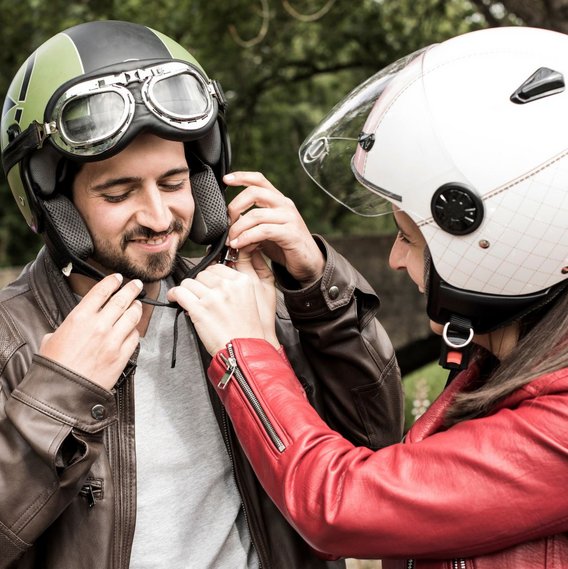
  • The helmet requirement applies not only to the rider but also to passengers. Basic protective clothing for scooter riders includes long trousers (e.g. jeans) and a jacket.
  • Footpaths and cycle paths are off-limits to scooters. The same applies to main roads and motorways, at least if the motorised two-wheelers cannot travel faster than 45 km/h. On the aforementioned expressways, vehicles must be capable of a minimum speed of 60 km/h.
  • Weaving through traffic jams or at red lights is prohibited on a scooter. You may only pass in accordance with the rules if there is sufficient space on the left.
  • Just park your scooter on the pavement? It’s tempting, but it’s not allowed!
  • Winter tyres are not compulsory, but are recommended for scooters during the cold season.


Scooter license classes: AM, A1, or B196?

From what age can you ride a scooter? Here is an overview of the minimum ages for riding different types of scooters and motorbikes:

Moped test certificate:

  • Motorised two-wheelers with an engine capacity of less than 50 cm³ and a top speed of 25 km/h
  • Important note: In Germany, carrying passengers is prohibited


AM:

  • Light mopeds with a maximum engine capacity of 50 cm³ and a top speed of 45 km/h
  • For electric models, a continuous rated power of 4 kW applies

A1:

  • Light motorcycles with a maximum engine capacity of 125 cm³ and a maximum engine power of 11 kW, where the power-to-unladen weight ratio does not exceed 0.1 kW/kg
  • A1 shortens the path to the A and A2 motorcycle licences

B:

  • Car driving licence
  • Class AM is automatically included in the driving licence
  • entitles the holder to obtain the B196 licence extension


A2:

  • Motorcycles with a power output of up to 35 kW, where the power-to-unladen weight ratio does not exceed 0.2 kW/kg
  • shortens the path to an unrestricted A motorcycle licence

A:

  • Full motorcycle licence for all types of motorbikes
  • At the age of 20, holders who have held an A2 licence for at least two years can obtain the full A licence
  • without prior experience, this licence can only be obtained from the age of 24

Anyone who holds a Category B driving licence can apply for the B196 extension, which entitles the holder to ride light motorcycles. The B196 is equivalent to the A1 licence, but is easier and cheaper to obtain. “Unlike the small motorcycle licence, however, the B196 endorsement does not entitle the holder to ride light motorcycles abroad, nor does it pave the way to the full A licence,” notes Matthias Wertz.

In addition, applicants must meet certain requirements:

  • They must have held a Class B driving licence for at least five years.
  • The minimum age is 25.
  • Although a theory or practical driving test is not required, driving lessons must be taken.

Riding a scooter in other EU countries

  • The rules for riding a scooter vary across European countries.
  • Anyone wishing to ride a scooter whilst on holiday should make sure they clarify the most important questions before setting off. That way, you’re guaranteed to avoid any disappointments during the best time of the year:
    • What driving licence regulations apply in the destination country?
    • Which road traffic rules must be observed?
    • Does the insurance cover damage abroad?
    • What requirements must be met to hire a scooter?
    • Where are you allowed to ride the scooter?

Good to know

Frequently asked questions about buying a scooter

Although no-name bikes are often cheaper to buy, they can cause problems when repairs are needed. When buying a bike, it is therefore worth investing in a well-established manufacturer and ensuring you have a local repair shop so that you can be sure of getting hold of spare parts.

When buying a scooter, you shouldn’t just focus on its appearance. Everyone’s body shape is different, and not every model will suit you.

Before buying, you should try out models from different manufacturers and take a test ride. Ensuring that a motorised two-wheeler is ergonomically suited to you not only guarantees a comfortable ride, but is also a fundamental aspect of safety.

Anyone considering buying a retro model or even a classic car should be cautious. As mopeds are not required to undergo a general inspection (HU), a significant number of motorised two-wheelers on the road have forged documents. Before deciding to buy, you should seek advice from an association or club.

Although only a helmet is compulsory, anything that makes sense on a motorbike also makes sense on a scooter. Many scooters now reach speeds of over 100 km/h, so protective clothing is more than just sensible – in the worst-case scenario, it can save lives.

You can already find good-quality, second-hand scooters at affordable prices in the low four-figure range. As there are generally no road tax or MOT costs involved, not only is getting started in the world of scooter riding relatively inexpensive, but so is the day-to-day running of the vehicle.

Mopeds and scooters with an engine capacity of up to 50 cc are not subject to mandatory general or emissions inspections.

Scooters over 50 cc that require registration are subject to regular general and emissions inspections. Further information can be found under General Inspections for Motorcycles.

More topics related to two-wheelers & bicycles

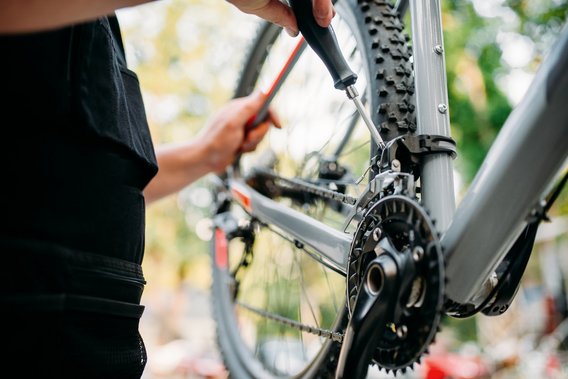
Fahrradreparatur mit Schraubendreher

Bicycle checklist

Ready for the new season? With our TÜV NORD checklist, you can keep track of all the important points: from brakes and lights to your e-bike battery. Simply download it and set off safely!
Get a free checklist
Zwei Personen fahren auf Motorrollern durch eine landschaftliche Umgebung

scooter

Scooters are a flexible and affordable alternative to cars. To ensure you can travel safely at all times, we offer bespoke inspection services tailored to your scooter. TÜV NORD Mobilität is your reliable partner for MOT tests, modifications and expert reports relating to your scooter.
Find out more about Motoroller
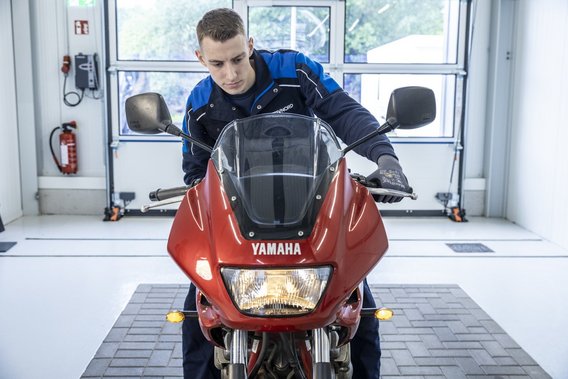
Prüfingenieur bei der Motorradprüfung an einer TÜV NORD Station

Motorcycle daytime running lights

Daytime running lights (DRLs) are designed to make motor vehicles more visible in daylight whilst minimising energy consumption. Their fitting to motorcycles (two-wheeled vehicles with a maximum design speed exceeding 45 km/h or an engine capacity exceeding 50 cm³) is permitted but not mandatory.
Find out more about daytime running lights for motorbikes

Contact

We look forward to receiving your inquiry!