Guides and tips
Spring is here, and after the strain of frost, gravel and road salt, your car now needs a thorough spring service. Our TÜV NORD Quick Check shows you how to get your vehicle back in shape efficiently.
Carry out a spring check for your car
After the freezing winter months, it’s time to give your car a thorough check-up.
Our TÜV NORD Spring Check helps you identify potential damage early on, save fuel and improve road safety. We’ll show you what really matters – from tyre changes and checking fluid levels and lighting to interior and underbody care. This way, you can start the warmer months with peace of mind and in an environmentally friendly way.
A thorough car wash is particularly important after winter, as residual road salt promotes corrosion and damages the paintwork and bodywork. You should therefore make sure to remove all winter grime from your vehicle at the start of the season and book an underbody wash at the car wash.
To prevent rust from forming, we also recommend thoroughly cleaning the wheel arches with a high-pressure washer. An engine wash certainly won’t do any harm at this stage either.
After a thorough clean, paintwork polishing and sealing will ensure shine and protection.
When cleaning the interior, you should pay particular attention to the inside of the windscreen, as the air circulation from the fan often causes a greasy film to form there. This is best removed using standard glass cleaners.
Keep a clear view: windscreen wipers often need replacing after a harsh winter. The rubber blades are frequently porous and cracked.
You should clean the windows thoroughly inside and out with a glass cleaner. The antifreeze has done its job, so it’s best to use a cleaner specifically designed for removing insects.
During your spring clean, you should also clean door and window seals with warm water to remove any unwanted residue, and then treat them with a care product.
After washing, check the bodywork, the area between the doors (known as the sills), and the rear silencer of the exhaust for corrosion.
Inspect the windscreen and headlights, as well as the paintwork, for any stone chips. If the bottom layer of paint or the primer has already been affected, you should seal it as soon as possible, as otherwise moisture can lead to corrosion in that area. A Smart Repair solution is recommended for such damage.
You can also touch up minor stone chips yourself using a touch-up pen.
Stone chips within the driver’s field of vision on the windscreen are a safety hazard and must be repaired by a professional immediately.
The spring service also includes checking fluid levels.
Check the oil level, the coolant and brake fluid, and the windscreen washer fluid level. This is not only important for road safety, but also increases the longevity of your vehicle and may prevent it from breaking down whilst driving.
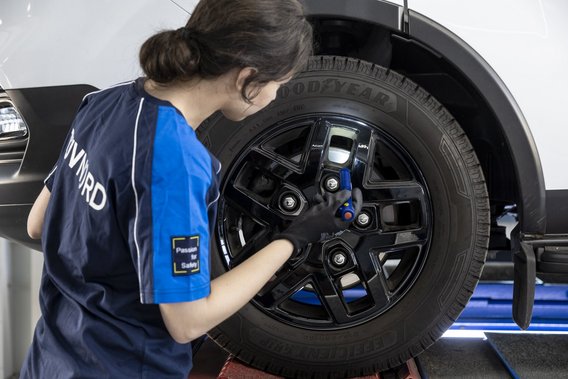
If you don’t use all-season tyres, it’s now time to switch to summer tyres. As a general rule, winter tyres are the right choice from October until Easter. The most important factor is that temperatures no longer drop below seven degrees Celsius. Above this temperature, summer tyres guarantee better grip.
If you are storing your winter tyres yourself, check them for any damage or foreign objects. Remove any small stones lodged in the tread, as these will unnecessarily stretch the rubber over the summer break. When storing your tyres, protect them from sunlight, as UV radiation causes the plasticisers in the rubber compound to degrade more quickly, making the tyres brittle and prone to cracking.
When checking your tyres, it is best to measure the tread depth at the same time. The legal minimum tread depth is 1.6 millimetres. For winter tyres, however, we recommend a minimum tread depth of 4 millimetres, as this provides better grip on snow-covered roads and consequently shortens the braking distance. If the tyres have insufficient tread, a new set of tyres will be required by autumn at the latest.
Last but not least, you should check the tyre pressure. If you drive a vehicle with a tyre pressure monitoring system, you should have the tyres changed at a specialist garage, as the system needs to be recalibrated to the current wheel-tyre combination after the change. Another advantage is that the professional will also check whether the tyres are out of balance. We therefore recommend visiting a specialist.

Properly functioning lights are essential and important at any time of year. You should therefore check your vehicle’s lighting system – from the indicators to the dipped headlights – at least once in the spring. To ensure your dipped and full-beam headlights are correctly adjusted, we recommend that you visit a specialist garage or your local TÜV NORD centre.
Nowadays, almost every newly registered car in Germany is fitted with air conditioning. The benefits are clear. In summer, drivers can keep a cool head even in the heat, and in winter, the air conditioning ensures a pleasant warmth and a clear view.
People with allergies benefit particularly from air conditioning, as an activated carbon filter removes up to 100 per cent of all pollen from the air. And that’s not all: fine dust and ozone are also kept out of the vehicle.
Changing the pollen filter is worth it!
To ensure the air conditioning works properly, the cabin filter must be replaced regularly – ideally at a specialist garage. Garages recommend changing the filter after one year or 15,000 kilometres.
Replacing it now in spring makes sense, as dirt and moisture can build up in the filter during autumn and winter. This allows bacteria and mould to multiply, which can lead to additional air quality issues in the vehicle.
Preventing refrigerant
loss Due to diffusion, the air conditioning system loses eight to ten per cent of its refrigerant each year. You should therefore switch on the air conditioning regularly – even at lower temperatures – once a week for at least ten minutes. This keeps the refrigerant in the cooling circuit and prevents the seals from drying out.
Even if your vehicle currently uses a standard cabin air filter, this can be replaced with a high-performance activated carbon combination filter at any specialist garage. This effectively keeps pollen, fine dust and harmful exhaust fumes out – ensuring clean, healthy air inside your car.
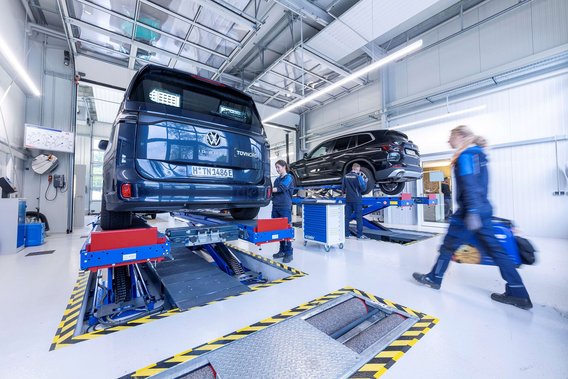
There are a few things, such as tyre pressure, lights, windscreen washer fluid and wiper blades, that you can easily check yourself. However, for the braking system, air conditioning, underbody or engine wash, we recommend taking your car to a specialist garage.
As soon as temperatures rise above 7°C, you should switch to summer tyres. Check the tread depth: the legal minimum is 1.6 mm, but 3–4 mm is recommended for safety reasons.
Tyre pressure should also be checked – even 0.2 bar less can increase fuel consumption by up to 3%.
Spring is the ideal time to change the filter, as dirt, moisture and pollutants build up during the autumn and winter. A fresh activated carbon filter ensures clean air – a major benefit, particularly for allergy sufferers.
A quick spring check will ensure your car is in good condition and safe to drive as spring begins. Check your brakes, lights, tyres and fluids – this will help you avoid any nasty surprises on the road.