Skip to content

Guide and tips

Buy a used electric car

Car purchases are rarely spontaneous, especially in times of geopolitical uncertainty and the mobility transition. The future belongs to electric cars, while combustion engines are being phased out. As new electric vehicles are expensive, the used car market for electric cars is becoming increasingly important.

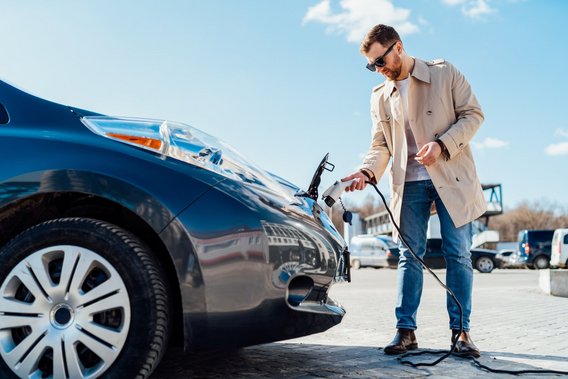
Elektroauto wird an einer Ladestation aufgeladen

Buying a used electric car—a good idea?

Hardly anyone buys a car on the spur of the moment, but rather with careful consideration. Especially in times of geopolitical uncertainty and in the face of what is probably the biggest mobility revolution since the invention of the petrol engine: the era of the combustion engine is coming to an end and the future belongs to electric vehicles. However, as brand-new electric vehicles are comparatively expensive, one area is becoming increasingly important: the used car market for electric cars!

But the question arises: is it a good idea to buy a used electric car?

When it comes to buying a second-hand car, in addition to the general tips on used cars for electric cars, there are additional and sometimes even fundamentally different aspects to consider.

Determining range and battery life for used electric cars

Even experts cannot accurately assess the condition of a battery by visual inspection alone. Philipp Wollenweber from TÜV NORD explains the process and the important aspects:

  • Battery test: In the past, the SoH of a battery could only be estimated using the manufacturer's own equipment. However, independent testing systems are becoming increasingly accurate and popular. These systems not only record the current values of the high-voltage battery, but also the battery history and user behaviour in order to reliably determine the SoH. TÜV NORD offers such tests in co-operation with a partner, and the increasing collection of comparative data means that these tests are becoming ever more meaningful.
  • Certificate: TÜV NORD enables retailers to test the entire high-voltage system of an electric car. In addition to the SoH value, the causes of battery wear can also be determined, as faults in the electronics can also lead to reduced battery performance or higher consumption. Dealers receive a test report that they can present at the time of sale.
  • Don't forget: The actual range in operation is a factor that is often overlooked. Driving style and traffic conditions can affect range, and low temperatures pose a particular challenge in winter as they can reduce range by 30 to 40 per cent. This aspect should be taken into account when making a purchase decision.
Elektroauto wird auf einem Parkplatz aufgeladen

Used electric car

Can you simply replace the battery?

The battery is the heart of an electric vehicle, and failure is considered a total economic loss. A new battery, including installation, can quickly become as expensive as a used mid-range car. Many people worry about this when considering switching to an electric car.

One solution: repair instead of replace! In most cases, it's not the entire battery that's broken. A battery consists of several modules and it is often enough to replace the damaged ones - which is of course cheaper.

Manufacturer warranties for electric cars are becoming increasingly generous: the time frame is often eight years, during which a battery performance of usually 70 to 80 per cent is guaranteed. As a rule, the warranty is vehicle-related. However, some manufacturers require a waiver of claims if the car goes on the used car market.

Charge without problems!

Even the best battery is useless if the charging technology does not work or the charging options are limited. The following points should therefore be clarified before buying a used electric vehicle:

  1. Charging cable: When buying second-hand, you must first check whether the charging cables on offer are undamaged. A new purchase can be expensive and cost nerves.
     
  2. Charging technology: When it comes to charging technology, a fundamental distinction must be made as to whether a vehicle can only charge with alternating current (AC) - which can take several hours and sometimes all night - or whether the electric car is also capable of fast charging (DC direct current).
     
  3. Charging power: The charging power is decisive for the duration of a charging process and is specified in kilowatts (kW). The greater the power of the vehicle and the charging station, the faster the electric car charges.
     
  4. Charging options: A wallbox for slow and gentle charging is recommended for the home connection. Is there a connection option? Are there also charging points at the workplace? And where is the nearest fast-charging station?

Watch out, brake!

The brakes of electric cars can be problematic, as defects are often found during general inspections. This is due to recuperation, which recovers kinetic energy during braking and reduces the load on conventional brakes. This can reduce the friction coefficient of the brake pads and cause rust. Drivers of electric cars should therefore regularly brake hard to heat up the brake system and avoid such problems. When buying a used electric car, it is important to check the brakes carefully, as a new set can be expensive.

Is there any financial support available for used electric cars?

Since 2020, there have also been subsidies for used electric vehicles. However, with many restrictions and only until the end of 2024:

  • The vehicle must not have received a subsidy from the German government's environmental bonus or any other government subsidy in an EU country when it is first registered.
  • The model must be on the list of eligible vehicles of the Federal Office of Economics and Export Control (BAFA).
  • Particularly high-priced models are excluded. Note: For used cars, 80 per cent of the list price (new car) minus the gross manufacturer's share is applied.
  • The vehicle may have changed hands several times, but the first registration must not date back more than one year.
  • At the time of registration in the applicant's name, the vehicle must not have demonstrably travelled more than 15,000 kilometres.
  • The subsidy does not apply to purchase contracts between private individuals.
  • From September 2023, only private buyers will be eligible for the subsidy.

Subsidies for private charging stations

Wallboxes for the home are currently (July 2023) no longer subsidised nationwide by the KfW (Kreditanstalt für Wiederaufbau). However, some federal states and local authorities do offer support. It may therefore be worth researching this.

Earn money with the GHG bonus

In addition, owners of electric vehicles can earn several hundred euros a year with the greenhouse gas reduction quota (GHG) bonus. It is a reward for the fact that electric vehicles do not emit anyCO2 into the environment locally. Although the bonus decreases year on year in line with the improving energy mix, it is to be paid out until at least 2030. 

The greenhouse gas reduction quota (GHG quota) is a climate protection instrument of the German government to gradually reduce greenhouse gas emissions in the transport sector. Since 2022, private households, businesses and fleet operators have also been able to apply to the Federal Environment Agency for the GHG quota.

What is the situation on the used car market for electric cars?

Until now, used electric cars were rather rare and expensive compared to vehicles with combustion engines. Although the supply is still limited, the market is changing. In the coming months, more leased cars will enter the market. On the other hand, electric cars are likely to be increasingly offered from private ownership, as the average holding period for passenger cars in Germany is around ten years and electric vehicles have stepped out of their niche since around 2012.

Stronger new car sales are also always a positive signal for the corresponding remarketing of the existing fleet.

What you should know

Frequently asked questions about buying a used electric car

  • A favourable start: A used electric vehicle usually costs significantly less than a new car. This avoids the biggest loss in value at the beginning.
  • Lower operating costs: Electric vehicles have fewer moving parts and do not require oil changes or exhaust systems, for example - maintenance and operation are more cost-effective.
  • Sustainable mobility: By continuing to use an existing vehicle, you reduce additional production costs and emission-intensive manufacturing processes - a benefit for the environment and resource conservation.

When buying a used electric vehicle, it is important to consider electric-specific criteria in addition to the usual vehicle checks:

  • Condition of the high-voltage battery: check the remaining capacity of the battery. A detailed health report provides information about the current condition.
  • Warranty & service history: Enquire about the remaining manufacturer's warranty, especially for the battery, and check the vehicle's maintenance history.
  • Charging infrastructure & suitability for everyday use: Make sure that you have access to suitable charging facilities and that the vehicle meets your daily driving needs.
  • Technical equipment & connection standards: Make sure that the vehicle has modern charging connections and that the software is up-to-date.
  • General vehicle condition: Check the condition of tyres, brakes and other mechanical components as well as the vehicle's accident history.

There is currently no state subsidy for the purchase of used electric cars. The environmental bonus was discontinued on 18 December 2023 and no new applications can be submitted since then.

However, the German government is planning to introduce a new purchase premium from 1 January 2026, which will also apply to used electric vehicles. A subsidy of up to 4,000 euros is planned for vehicles with a net list price of less than 45,000 euros. Households with a gross annual income of up to 45,000 euros are eligible for the subsidy. This measure aims to make the switch to electromobility more socially equitable.

Please note that the exact details and conditions of the subsidy have not yet been finalised. It is advisable to follow the latest information on official websites such as the Federal Ministry of Economics and Climate Protection or the Federal Office of Economics and Export Control (BAFA).

The value stability of used electric cars is currently limited. According to current data, the residual value of a three-year-old electric car averages 50.3% of the new price, which represents a significant decline compared to 61.5% at the beginning of 2023. By comparison, petrol and diesel cars in the same age category continue to achieve residual values of over 60%.

Some models, particularly from the luxury segment, have suffered even greater losses in value in recent years. For example, the residual value of a Jaguar I-Pace up to four years old fell by more than €23,000 between January 2022 and December 2024.

This rapid decline in value is influenced by several factors:

  • Technological advances: New models offer improved ranges and charging speeds, making older vehicles less attractive.
  • Market development: A growing supply of used electric cars is leading to an oversupply, which is depressing prices.
  • Battery ageing: The performance of batteries decreases over time, which has a negative impact on resale value.

However, this also represents an opportunity for buyers: the current market offers attractive prices for used electric cars. Vehicles from former company fleets are particularly recommended, as they are often well maintained and still come with manufacturer warranties.
More topics related to electric cars

Elektroauto wird an einer Ladestation aufgeladen

Electric car battery

The battery of an electric car loses performance with increasing utilisation. On the one hand, it ages through charging and discharging processes themselves (technical term: cyclical) and on the other hand through time (calendrical). You can increase the longevity of the battery with a few tricks.
Learn more about electric car battery
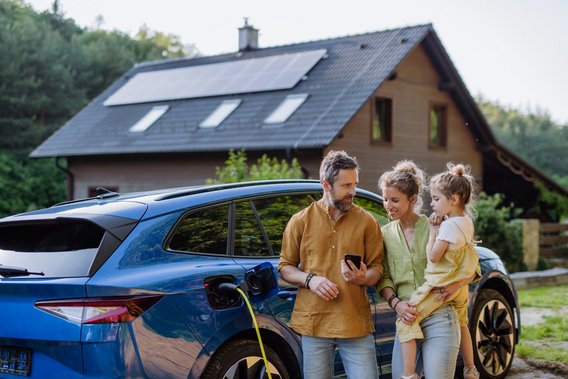
Familie lädt Elektroauto vor einem Haus mit Solaranlage

Holidays with the e-car

Holiday trip with an electric car. In addition to the range of the vehicle and the network of charging stations, good travel preparation is crucial. Find out all about the advantages and disadvantages of a holiday trip with an electric car as well as tips for planning your trip and what else you need to consider.
Find out more about holidays with the e-car
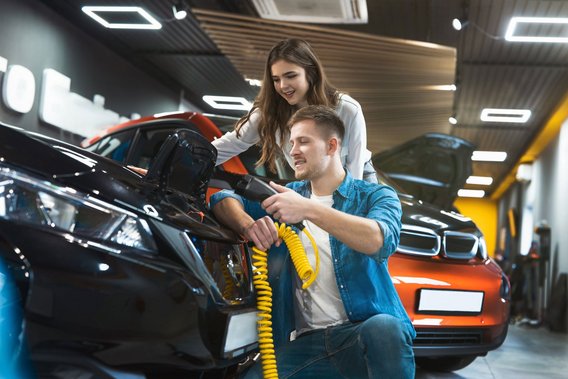
Paar beim Laden eines Elektroautos

Everything you need to know about electric cars

Whether you are already driving an electric vehicle, planning to switch or want to find out about new drive technologies - electromobility is driving our future. TÜV NORD Mobilität supports you with many years of experience, practical expertise and modern services relating to electric cars.
Find out more about electromobility

Contact

We look forward to receiving your inquiry!