A quick question
What is ISO 15118?
How ISO 15118 is intended to simplify charging electric cars and support the energy transition. More on #explore.
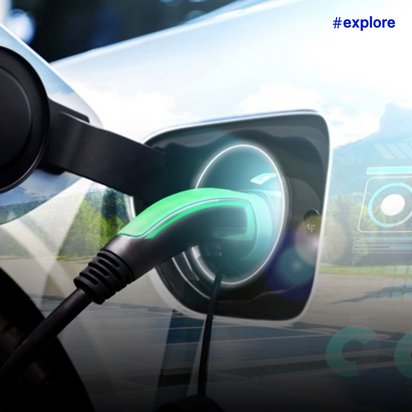
A quick question
How ISO 15118 is intended to simplify charging electric cars and support the energy transition. More on #explore.
10 February 2022
Anyone wishing to charge their electric car at a public charging point today cannot avoid a certain amount of hassle: first, they have to get their charging card or open their app; only then can they start charging. ISO 15118 is intended to make this process considerably easier. First of all, you have to find your charging card or open your app before you can even start charging. ISO 15118 is intended to make this process much easier. Manuel Hagemann, an e-mobility expert at TÜV NORD, explains how the standard could also be used to stabilise power grids in the age of the energy transition.
How can the standard simplify the charging of an electric car?
ISO 15118 is intended to make charging as simple and convenient as possible for electric car drivers. “Plug & Charge” is the name of the game here: instead of having to authorize the charging procedure via an app or an RFID card as before, you’ll simply have to plug the car in. The vehicle will automatically identify and authorize itself at the charging station, which will then launch the charging process. Billing takes place as a background function. ISO 15118 uses encryption methods and security certificates to ensure that the communication between the vehicle and the charging station and the users’ stored contract data are protected. Another advantage of the new version of the ISO standard is that it should now also be possible to store two or more charging contracts. The vehicle can then decide for itself which of these offers the best rate for this charging station. That’s still an issue at the moment: I drive an electric car myself and currently have to use three different apps to see which charging station will offer me the best price. In the future, I’ll be able to leave this choice to the vehicle.
Which electric vehicles are already compatible with “Plug & Charge” – and where can you charge them?
The technology is currently only available in a few models, but the number is growing. To name a few, the electric Smart, the Audi e-tron, the Ford Mustang Mach-E, the Porsche Taycan and the new Mercedes EQS have already implemented the ISO standard. The rule of thumb is that, for it to be “Plug & Charge”-capable, an electric car must have hardware with a high level of IT security. This will allow the functionality to be activated retrospectively via software updates. VW has announced that its ID models – the ID.3, the ID.4 and the new ID.5 – are all going to have this capability this year.
Some AC charging stations are already ISO-15118-ready and support “Plug & Charge”. The same applies to most of the current generation of fast-charging stations, to which the same functionality can likewise be added via updates. At Ionity's 400-or-so fast charging stations in Europe, it’s been possible to charge using “Plug & Charge” since October 2021. Aral also wants to introduce this functionality at its charging stations
ISO 15118 is intended to make charging as simple and convenient as possible for electric car drivers, based on the ‘Plug & Charge’ principle.
Manuel Hagemann
E-mobility expert at TÜV NORD
How can the standard simplify the charging of an electric car?
ISO 15118 is intended to make charging as simple and convenient as possible for electric car drivers. “Plug & Charge” is the name of the game here: instead of having to authorize the charging procedure via an app or an RFID card as before, you’ll simply have to plug the car in. The vehicle will automatically identify and authorize itself at the charging station, which will then launch the charging process. Billing takes place as a background function. ISO 15118 uses encryption methods and security certificates to ensure that the communication between the vehicle and the charging station and the users’ stored contract data are protected. Another advantage of the new version of the ISO standard is that it should now also be possible to store two or more charging contracts. The vehicle can then decide for itself which of these offers the best rate for this charging station. That’s still an issue at the moment: I drive an electric car myself and currently have to use three different apps to see which charging station will offer me the best price. In the future, I’ll be able to leave this choice to the vehicle.
Which electric vehicles are already compatible with “Plug & Charge” – and where can you charge them?
The technology is currently only available in a few models, but the number is growing. To name a few, the electric Smart, the Audi e-tron, the Ford Mustang Mach-E, the Porsche Taycan and the new Mercedes EQS have already implemented the ISO standard. The rule of thumb is that, for it to be “Plug & Charge”-capable, an electric car must have hardware with a high level of IT security. This will allow the functionality to be activated retrospectively via software updates. VW has announced that its ID models – the ID.3, the ID.4 and the new ID.5 – are all going to have this capability this year.
Some AC charging stations are already ISO-15118-ready and support “Plug & Charge”. The same applies to most of the current generation of fast-charging stations, to which the same functionality can likewise be added via updates. At Ionity's 400-or-so fast charging stations in Europe, it’s been possible to charge using “Plug & Charge” since October 2021. Aral also wants to introduce this functionality at its charging stations.

That doesn't sound like a fast or comprehensive implementation. Why is that?
Although ISO 15118 offers greater security than classic RFID cards, its implementation is quite complex and is associated with not inconsiderable effort and expense for vehicle manufacturers, charging station operators and charging power providers. On the one hand, this is because it requires coordination between different actors. On the other, the standard is constantly undergoing further development. Of course, charging station operators and vehicle manufacturers must always stay up to date to reliably guarantee communication between the EV and the infrastructure. To facilitate the implementation of the standard, the CharIN association has developed test scenarios which the actors involved which be able to fall back on during implementation.
Will the ISO standard also allow electric cars to contribute to the stabilisation of power grids?
The generation of electricity from renewable energies is associated with fluctuating availability. This is because the wind and the sun don’t always blow or shine equally strongly. To compensate for these fluctuations and possible imbalances in the power grid, the electricity from electric vehicle batteries can be fed back into the grid when required. This will allow vehicle-to-grid to make an important contribution to the success of the energy transition. And EV owners who make their batteries available in this way to stabilise the grids will then also be remunerated accordingly – be it through fees or discounts from the local electricity supplier. Both private individuals and commercial fleet operators, for instance transport companies with a lot of electric buses, can generate revenue from their electric vehicles in this way when they aren’t using them. How this will be managed at scale in specific terms has yet to be regulated.
But nobody wants to set out with an empty battery ...
Of course, the battery doesn’t get completely discharged when it’s feeding energy into the grid. What happens instead is that the vehicle owners only release a small part of the total capacity of the battery for vehicle-to-grid, for example ten percent. Moreover, the functionality specified in ISO 15118 can also be used to specify that the battery should be at a certain charge level at the planned departure time. The electric vehicle is then charged more slowly but also in a way that’s less hard on the battery. And you still have the guarantee that there’ll be enough charge in your battery when it’s time to set off.
What do you think: How might ISO 15118 and, with it, “Plug & Charge” spread in the coming years?
My expectation is that the market penetration of the ISO standardwill continue to gain momentum, that “Plug & Charge” will become a matter of course, and that charging at public charging stations will be as uncomplicated as it already is at home. There is some discussion about whether the implementation of ISO 15118 should be given a push by policymakers, for example through mandatory inclusion in the charging station ordinance, but I think the market should regulate this itself. For customers, “Plug & Charge” offers a massive boost in convenience. And the growing demand for simplified charging is also going to motivate vehicle manufacturers and charging station operators to implement the technology.
This is an article from #explore. #explore is a digital journey of discovery into a world that is rapidly changing. Increasing connectivity, innovative technologies, and all-encompassing digitalization are creating new things and turning the familiar upside down. However, this also brings dangers and risks: #explore shows a safe path through the connected world.