Skip to content

Testing

Fire Safety in Motor Vehicles
Fire safety in motor vehicles

Requirements in Germany and Europe

Following fire incidents involving coaches and regular-service buses, the issue of fire safety on buses is receiving increasing attention, particularly from the media. Passenger safety is the top priority here and must be ensured through the use of suitable materials. To determine the fire-technical properties of these materials, several international and national test methods are in place, which are applied by TÜV NORD and explained below.

For motor vehicles in Group M3, Class II and Class III, the international standard UN ECE R118 sets out requirements regarding fire behaviour and the ability to repel fuels and lubricants for materials used in the passenger compartment, the engine compartment and in separate heating compartments. Materials are tested and assessed against these requirements using five different test procedures (annexes).

We test the flammability behaviour of materials used in motor vehicle interiors, for example, in accordance with ECE R118, EU Directive 95/28/EC, FMVSS 302, CMVSS 302, DIN 75200, ISO 6722, ISO 14572, ISO 3795, as well as in accordance with various in-house standards of vehicle manufacturers.

In addition, we carry out tests to determine the spread of fire along electrical cables in accordance with ECE R-118, Edition 12/2012, Section 6.2.6, in conjunction with ISO 6722:2006, Section 12.

The purpose of the tests is to determine the burning rate of materials used in the passenger compartment of motor vehicles when exposed to a small pilot flame.

Furthermore, we are a recognised test centre of the FIA (FIA Test House for Extinguisher Systems) and the DMSB (Umbrella Organisation for Motor and Motorcycle Sport) for the testing of fire-extinguishing systems in racing vehicles.

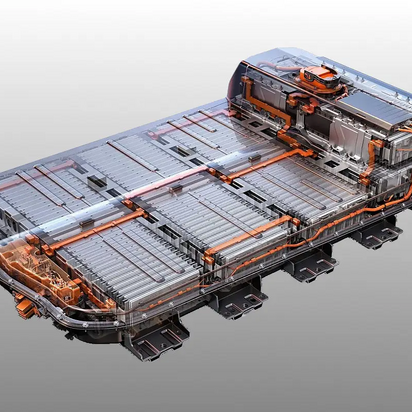
As one of the first TÜV NORD test centres in Germany, we are accredited to carry out fire tests on batteries in accordance with ECE R100 Annex 8E.

We test for your safety

In so-called abuse tests, the safety behaviour of batteries is assessed under conditions that deviate from normal operating conditions. TÜV NORD Systems, through its Testing division, operates a large test site in Dortmund equipped with specialised facilities. We can test modules and entire battery systems (up to 1,000 kg) for our customers in accordance with applicable norms, standards or customer-specific specifications. All test chambers can be fitted with video and data recording equipment. Remote transmission or remote control is also possible.

Using the REESS as an example, we can carry out the following tests for you:

Nail
test, external short circuit
, internal short circuit
, extended fuel fire
test, salt water test

, immersion
tank, battery
assessment, Korea Motor Vehicle Safety Standard…

Efficacy testing of fire suppression systems for buses

Fire-extinguishing systems in the engine compartment of passenger vehicles will become mandatory from 1 September 2020 for vehicles in classes M2 and M3. These fire-extinguishing systems must be tested and approved for functionality and extinguishing effectiveness (ECE R 107, Amendment Series 06, Annex 13). 

A brief overview of our range of services:

  • ECE R118 Annex 6; Fire behaviour of interior materials – horizontal flame spread
  • ECE R118 Annex 7; Fire behaviour of interior materials – radiant heat test
  • ECE R118 Annex 8; Fire behaviour of interior materials – vertical flame spread
  • ECE R119 Annex 9; Flammability of interior materials – resistance to fuel absorption
  • ECE R118 Annex 10; Fire behaviour of cables
  • ISO 5658-2; Lateral flame spread in a vertical configuration; Alternative method in accordance with ECE R118
  • ECE R100 Annex 8E; Battery-powered electric vehicles – Resistance of traction batteries to escalating reactions under fire exposure
  • ISO 3795; Road vehicles, tractors and machinery for agriculture and forestry – Determination of the fire behaviour of interior materials
  • EU Directive 95/28/EC Annex IV; Test to determine the horizontal burning rate of materials
  • EU Directive 95/28/EC Annex VI; Test to determine the vertical burning rate of materials
  • DIN 75200; Determination of the burning behaviour of materials used in motor vehicle interiors
  • ISO 6722, paragraph 12; Road vehicles – 60 V and 600 V single-core cables – Dimensions, test methods and requirements, paragraph 12: Resistance to flame propagation; Cable testing as required by ECE R118
  • ISO 6722-1, paragraph 5.22; Road vehicles – 60 V and 600 V single-core cables; Part 2: Dimensions, test methods and requirements for copper conductor cables; paragraph 5.22 Resistance to flame propagation; Cable testing as required by ECE R118
  • ISO 6722-2, paragraph 5.22; Road vehicles – 60 V and 600 V single-core cables; Part 2: Dimensions, test methods and requirements for aluminium conductor cables; paragraph 5.22 Resistance to flame propagation Cable testing as required by ECE R118
  • ISO 14572, paragraph 5.21; Road vehicles – Round, sheathed, 60 V and 600 V screened and unscreened single- or multi-core cables – Test methods and requirements for basic- and high-performance cables; paragraph 5.21; Resistance to flame propagation – cable test, not cited in ECE R118
  • ECE R107 Amendment 3; Buses – Demonstration of the fire-extinguishing system’s performance
  • UL 2580 UL STANDARD FOR SAFETY BATTERIES
  • UL 94
  • FIA TEST HOUSES FOR EXTINGUISHER SYSTEMS
  • GB/T 31467.3-2015 Immersion tests, propagation
  • NEW: GB 38031-2020 Thermal Propagation Tests
  • This test verifies whether, following a thermal runaway in a cell within the battery pack, at least five minutes remain before a fire or explosion occurs. This is intended to give occupants sufficient time to evacuate the vehicle in good time in the event of a hazard. This hazard must be indicated in good time.

Product testing of materials for use in motor vehicles (ECE R118)

Accreditation

The TÜV NORD Fire Protection Testing Centre is accredited by DAkkS under the reference numbers D-PL-11035-03-01, D-PL-11035-03-02 and D-PL-11035-03-03 in accordance with DIN EN ISO/IEC 17025:2018 for the following procedures:

  • ECE R118 (all editions) Annexes 6, 7 and 8
  • ISO 5658-2
  • ISO 6722
  • ISO 14572

Test specifications

There are five test procedures available:

  • Test method in accordance with Annex 6 ‘Horizontal test’ for products intended for horizontal use. Materials installed in a horizontal position in the passenger compartment, engine compartment or separate heating compartment (insulation materials) are tested in accordance with this annex to determine their horizontal burning rate. To this end, a test specimen in a horizontal position is exposed to a defined flame for 15 seconds and the progression of the flame is recorded. To ‘pass’ the test, the resulting burn rate must not exceed 100 mm/min.
  • Test procedure in accordance with ECE R118, Annex 7 ‘Radiant heat test’ for materials fitted more than 500 mm above the seat cushion or insulation material in the engine compartment and separate heating compartments. The melting behaviour is determined using a 500 W radiant heater, to which a test specimen is exposed for 10 minutes (radiant heat 3 W/cm²). A piece of wadding is positioned beneath the test specimen, at a distance of 300 mm; this must not ignite during the test as a result of dripping or falling test material. If this criterion is met, the test is deemed to have been ‘passed’.
  • Test procedure in accordance with ECE R118, Annex 8 ‘Vertical Test’ for products intended for vertical installation in the passenger compartment, engine compartment or separate heating compartment (insulation materials). The vertical burning rate is determined by exposing a vertically positioned test specimen to a flame. The edge of the specimen is exposed to a ‘lighter-like’ flame for either 5 seconds or 15 seconds. The progress of the flame is recorded and the burning rate determined. The test is considered ‘passed’ if the burning rate does not exceed 100 mm/min.
  • Test method in accordance with ECE R118, Annex 9, for determining the ability of materials to repel fuels and lubricants. This annex covers insulating materials used in the engine compartment and separate heating compartments. To this end, a test specimen is exposed to diesel for 24 hours; over the entire period, it must not absorb any fuel or exhibit a mass increase of more than 1 gram.
  • Annex 10 is the most recent annex to ECE R118 and came into force for the first time in October 2017. This annex governs the testing of cables longer than 100 mm used in vehicles. Previously, these were tested and assessed in accordance with ISO 6722:2006, clause 12. Test reports based on this procedure remain valid. Today, as an alternative to Annex 10, testing may be carried out in accordance with ISO 6722‑1:2011, clause 5.22. In Annex 10, electrical cables are tested for their resistance to flame spread by clamping a test specimen at a 45° angle and exposed for 15 seconds or 30 seconds to a flame 10 cm high and at a temperature of 950°C. The burning time and the burnt length of the test specimen are recorded. To pass the test, the test specimen must not burn for more than 70 seconds and must retain an unburnt length of at least 50 mm.
  • UN ECE R118 Annex 10; Determination of resistance to flame propagation of electrical cables – Test method in accordance with ISO 6722, 2006 edition, for electrical cables
  • Three annexes in one test! Test method in accordance with ISO 5658-2, 2006 edition; covers test methods 6, 7 and 8
  • The customer shall agree with the Technical Service (e.g. TÜV NORD Mobility – IFM) on which test method is to be applied. TÜV NORD will be happy to advise you. See also ECE R118, clause 6.2.
  • TÜV NORD offers this testing service. Type approval is issued by TÜV NORD Mobilität – Institute for Vehicle Technology and Mobility (a Technical Service designated by the KBA).

Test specimen

Principle: Test specimens should correspond to their intended use.

Test specimens of the following dimensions are required:

  • Method in accordance with Annex 6:
    6 test specimens, 100 mm × 356 mm, for each production direction/material structure; maximum material thickness 13 mm
  • Method in accordance with Annex 7:
    5 test specimens, 70 mm × 70 mm, for each material surface; maximum material thickness 13 mm
  • Method in accordance with Annex 8:
    4 test specimens, 560 mm × 170 mm, for each production direction/material structure; maximum material thickness 13 mm
  • Method in accordance with ISO 6722:
    6 test specimens, 650 mm in length
  • Method in accordance with ISO 5658-2:
    6 test specimens, 798 × 153 per surface; maximum material thickness 50 mm

If the application thickness exceeds the maximum material thickness for the test specimen, the material must be machined down to the maximum material thickness from the side not to be tested.

If test specimens cannot be produced in the required dimensions, or if the product to be tested is smaller than the test specimen dimensions in its application, please contact us.

Procedure

1

Conditioning

Test specimens are conditioned under standard climatic conditions

2

Examination

The test specimen is subjected to stress caused by thermal radiation or a flame (depending on the method)

3

Waste disposal

Tested and unused test specimens will be disposed of unless otherwise expressly requested

4

Report

The report is being drafted and sent

Changes to the version numbers of ECE R118

The following amendments or additions have been made to ECE R118-03:

  1. Introduction of test annex ‘Annex 10’ for the testing of electrical cables
  2. Definition of electrical cables, conduits and cable ducts
  3. Specification of the flame exposure time for cable types
  4. Testing of cable sleeves and ducts is now required
  5. Additional information in test reports regarding the masses and dimensions of test specimens
  6. Changes to the test specimen holder
  7. Changes to the smoke extraction system
  8. Minimum dimensions for test specimens of 380 mm × 3 mm have been specified
  9. The dimensions of cable sleeves and ducts are set at 560 mm. The minimum dimension is 380 mm

UN ECE Regulations

The latest versions of the UN regulations listed below can be accessed via this link.

Sie haben Fragen?