Business Field Sustainability
As an accredited Designated Operational Entity (DOE), TÜV NORD supports project developers, investors, and organizations in the validation and verification of climate action projects under the Paris Agreement Crediting Mechanism (PACM).
Request Article 6.4 verification or validation in just 1 minute
The Article 6.4 mechanism of the Paris Agreement enables the generation of internationally tradable emission credits (A 6.4 ERs). Eligible projects can have their verifiable emission reductions recognised on the global carbon market, thereby contributing to international climate targets.
As an accredited Designated Operational Entity (DOE), TÜV NORD supports project developers, investors and organisations in the validation and verification of climate projects in accordance with the requirements of the Paris Agreement Crediting Mechanism (PACM).
A 6.4 is the official successor to the Clean Development Mechanism (CDM) and establishes a uniform framework for high-quality climate projects under the supervision of the United Nations Framework Convention on Climate Change (UNFCCC).
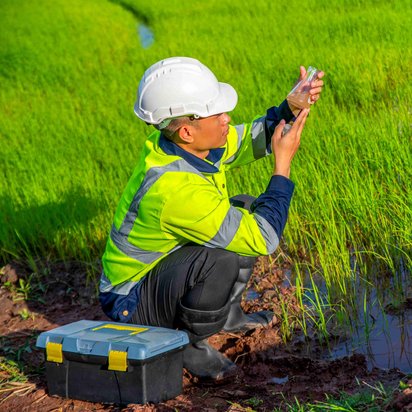
A 6.4 is aimed in particular at project developers and organisations that are implementing emission reduction measures or CO₂ removal projects in countries with a Designated National Authority (DNA) and wish to have these recognised in accordance with UNFCCC standards.
These include, amongst others:
Independent validation and verification by TÜV NORD provide the foundation for having your emission reductions recognized under the Article 6.4 Mechanism.
Accredited accross 15 sectoral scopes
TÜV NORD is accredited for 15 sectoral scopes under Article 6.4 covering projects ranging from renewable energy, industrial processes, and energy efficiency to afforestation and agricultural activities.
As an accredited VVB, we support you throughout the entire A 6.4 project cycle – from the validation of project documentation to the verification of the emission reductions achieved.
Our services at a glance:
Scope 1: Energy industries (renewable/non-renewable sources)
Scope 2: Energy distribution
Scope 3: Energy demand
Scope 4: Manufacturing industries
Scope 5: Chemical industries
Scope 6: Construction
Scope 7: Transport
Scope 8: Mining/mineral production
Scope 9: Metal production
Scope 10: Fugitive emissions from fuels (solid, oil and gas)
Scope 11: Fugitive emissions from production and consumption of halocarbons and sulphur hexafluoride
Scope 12: Solvent use
Scope 13: Waste handling and disposal
Scope 14: Afforestation and reforestation
Scope 15: Agriculture
To qualify under Article 6.4, a project must demonstrate additional emission reductions ("additionality"), support the host country's sustainable development goals, consider the interests of relevant stakeholders, and meet applicable safeguard requirements. The project must also receive approval from the host country's Designated National Authority (DNA).
The current list of Designated National Authorities (DNAs) is published on the UNFCCC website.
Validation takes place before the project begins and checks the plausibility and compliance of the project design.
Verification takes place after implementation and ensures that the emission reductions have been achieved as planned.
The duration depends on the complexity of the project, the completeness of the documentation and the willingness of those involved in the project to cooperate.
There are 17 sectoral scopes in total. TÜV NORD is currently accredited for scopes 1 to 15. We also aim to obtain accreditation for scopes 16 and 17 in the future.
For validation, we require, amongst other things,
For verification, the monitoring report and the measurement data are particularly crucial.
Yes, but only under certain conditions.
CDM activities (except CDM A/R project activity or CDM A/R PoA) which are eligible for transition to the Article 6.4 must submit a transition request to the UNFCCC by 31 December 2023.
CDM A/R project activities or CDM A/R PoA and CPAs which are eligible for transition to the Article 6.4 mechanism must submit a request to the UNFCCC by 31 December 2025.
The deadline to submit approval of CDM transition to PACM by a host Party has been extended to 30 June 2026.
For more information, please see: Transition of CDM activities
No. Under the Article 6.4 Mechanism, TÜV NORD does not issue emission reduction certificates directly. As an accredited Designated Operational Entity (DOE), we conduct the required validation and verification activities and prepare the corresponding reports for submission to the UNFCCC. Once the UNFCCC has completed its review, Article 6.4 Emission Reductions (A6.4ERs) may be issued for the project.
No. The Article 6.4 mechanism is a centrally administered UN mechanism that requires formal accreditation by the UNFCCC. In contrast, Article 6.2 is based on bilateral agreements between participating countries and does not require UNFCCC accreditation. Instead, participation typically requires registration or designation by the competent authorities of the host and partner countries.
Important: Article 6.4 Emission Reductions (A 6.4 ERs) can be used more broadly within the international carbon market, whereas Article 6.2 credits are only tradable between the participating countries.
The costs depend on the nature and scope of the project, the complexity of the underlying data, and the level of assessment effort required.
Contact us for a tailored quotation. We will be happy to provide an individual cost estimate based on the specific requirements of your Article 6.4 projetc.
TÜV NORD is an internationally recognised testing and certification service provider. We assess and certify compliance with statutory requirements and voluntary standards worldwide. Our inspectors are experts in their respective fields and work according to a standardised methodology. This enables us to guarantee you neutrality, independence and ongoing support.