Event
We give you the edge in knowledge.
Our free webinars offer you in-depth insights into current standards, legal requirements and innovative technologies. Experienced experts share their practical knowledge, highlight relevant developments and provide specific recommendations for successful implementation in building operations.
Register for the webinar


Thank you very much for your interest. We are delighted that you would like to take part in our free webinar on building services engineering.
The webinar will be held via Webex. You can take part easily via the web version – a Webex account is not required.
As our webinars are designed to provide concise insights, we do not issue formal certificates of attendance. You can use the content slide in the handout as proof of your attendance.
In return for your free participation, we would like to ask for your consent to receive future emails about TÜV NORD’s services and news.
Any questions?
Our team will be happy to help.
You can download the latest webinar calendar for the planned building services webinars here.
We are working flat out to put together new and exciting topics for you, as well as some perennial favourites. The schedule is not yet finalised and changes may still be made.
What are my obligations as an operator of a lift system under the Industrial Safety Regulation (BetrSichV)? What deadlines and non-conformities apply, and what do I need to bear in mind?
Are you aware of the potential cyber threats to lift systems? Have you documented and implemented the necessary protective measures accordingly? After attending the TÜV NORD webinar, you will be familiar with the cyber security requirements for lift systems in accordance with TRBS 1115-1. The implications of the new regulations for lift operators will be clearly explained.
We’ll show you how TÜV NORD can support you as a reliable partner. As your manufacturer-independent partner, we’ll also provide you with an insight into the TÜV NORD risk analysis for lift systems. This enables you, as a lift operator, to meet all legal requirements and complements the comprehensive safety profile of your lift system. This allows you to carry out the risk assessment for your lift system independently.
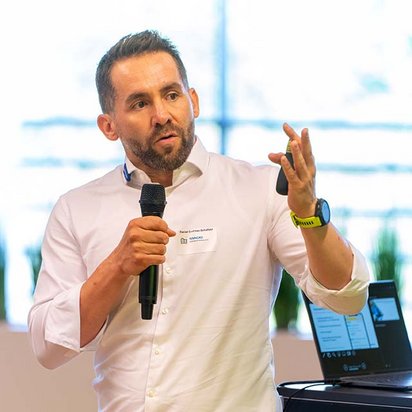
Speakers: Kai Ellieroth, Peter Sebastian Stehr and Peter Lübbe
What hidden risks lurk in older lifts? How can operators reliably address these through targeted modernisation? In our webinar, we’ll highlight typical safety shortcomings, explain your obligations as an operator and introduce you to a tried-and-tested, modular service. This service guides you safely, step by step, through the entire modernisation process.
Speaker: Rainer Jandl
As modern buildings become increasingly connected, their vulnerability to attack also increases. What used to operate purely mechanically is now digitally connected and therefore potentially at risk. A cyberattack is no longer limited to lifts. Emergency lighting, door systems, barrier systems and other elements of building automation can also be compromised, leading to significant safety and operational risks in the event of an emergency.
In our webinar, we will address the specific cyber risks in buildings that can arise from the use of networked systems. We will examine the methods used by attackers and analyse the appeal of these systems to criminals.
Furthermore, we will explain how operators can effectively protect their buildings through structured analyses, clear lines of responsibility and appropriate technical measures.
Are you an entrepreneur, a building owner or an operator of buildings such as places of assembly, hospitals, special-purpose buildings and similar facilities? If so, you must meet and comply with certain legal requirements relating to the electrical installation.
With the multitude of guidelines, regulations and building code requirements relating to VdS testing, DGUV V3 and electrical installations under building regulations / the Testing Ordinance, it is easy to lose track of the big picture.
The experts at TÜV NORD specialise in providing you with a clear framework to efficiently overcome these challenges and will explain the differences between VdS testing, DGUV and the testing of electrical installations in accordance with building regulations / the Testing Ordinance.
Why are these inspections essential?
Our solution for you:
Photovoltaic systems are crucial to the energy transition and make a significant contribution to environmental protection. A thorough site analysis and compliance with legal requirements are essential for the planning process. Permits are required prior to installation. Certification in accordance with recognised standards ensures compliance with technical requirements. Following installation, regular maintenance is important to guarantee the system’s efficiency and longevity.
Operators must comply with inspection requirements in accordance with the Accident Prevention Regulations (DGUV). Property insurers may require additional inspections. This webinar provides a concise overview of the planning, certification and operation of PV systems, as well as the relevant legal requirements. Participants will receive valuable tips for the safe and efficient operation of their systems.
Air of impeccable hygienic quality is a key prerequisite for our health, well-being and productivity. Section 4 of the Workplace Regulations therefore requires regular testing of ventilation and air-conditioning systems. The technical standard VDI 6022 sets out the requirements for how this is to be implemented. Hygiene safety is a crucial requirement that operators must comply with. Compliance with VDI 6022 is therefore a legal obligation under the Workplace Ordinance.
Speaker: Daniel Michalek
The new Drinking Water Ordinance is firmly committed to a risk-based approach to drinking water protection and stricter quality requirements. It introduces new chemical parameters or lowers limit values – for example, for lead, chromium and PFAS – and requires operators to adopt a risk-based approach throughout the entire supply chain, from extraction to the tap. The aim is to further improve drinking water safety and minimise hygiene risks in the long term.
The initial hygiene inspection in accordance with VDI/DVGW 6023 plays a central role in this. It is mandatory for newly installed or substantially modified drinking water systems and ensures that the systems comply with generally accepted technical standards even before they are filled for the first time. This includes a hygiene and technical inspection of the installation, a review of all documentation, and a microbiological analysis of the filling water. In this way, planning and installation defects are identified and rectified at an early stage – ensuring safe, compliant and long-term trouble-free operation of the system.
Due to the high risk associated with the release of Legionella, operators of evaporative cooling systems are required to carry out various safety-related tasks. These are set out in the 42nd Federal Immission Control Ordinance and in the technical standards VDI 2047 Part 2 and Part 3.
TÜV NORD offers you the necessary services, backed by experience, quality and safety.
Our independence ensures that safety is the top priority when assessing your systems. Our range of services covers all aspects of the testing and inspection of evaporative cooling systems, cooling towers and wet scrubbers, regardless of the manufacturers and suppliers of the equipment.
The Machinery Regulation will come into force on 20 January 2027 – with no transition period. Until then, the current Machinery Directive (2006/42/EC) will continue to apply.
What will change?
Who is affected?
Manufacturers, distributors, importers, authorised representatives and operators must prepare in good time – there is no transitional period.
Why should you attend?
Just how safe are your buildings really? In our webinar, you’ll learn why structural inspections are crucial for identifying risks at an early stage, preventing damage and safeguarding the long-term value of your property. Dr Alexander Wiegand explains the two-stage safety concept behind the building inspection, highlights typical defects in industrial halls and buildings, and explains why structural alterations, extreme weather conditions or undetected damage can lead to serious hazards. Draw on our experts’ knowledge and discover how to maintain your buildings effectively and in compliance with the law – for greater safety, cost-effectiveness and sustainability.
Thank you very much for your interest. We are delighted that you would like to take part in our free webinar on building services engineering.