Product certification for ship-building

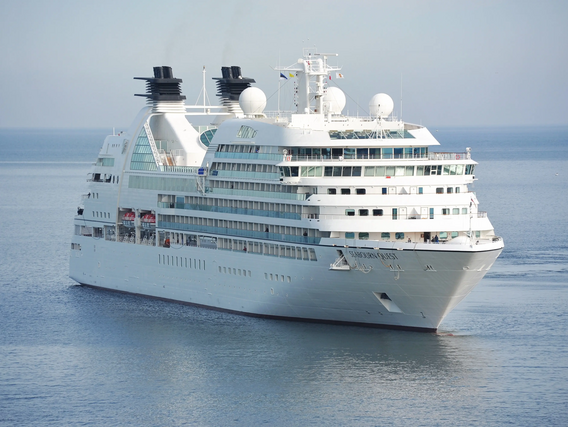
We enable manufacturers to gain market access in the shipbuilding sector through materials testing and market-relevant certification, all provided by a single organisation. Our focus is on clearly defined requirements, a structured testing process and a transparent, compliant certification process. By providing a single point of contact, we minimise interfaces and administrative burdens without compromising the necessary independence of the assessment. In this way, we lay a reliable foundation for the successful approval of your marine equipment.
To ensure that crew and passengers can be safely rescued in the event of an emergency at sea (e.g. in the event of an accident or incident), essential shipboard equipment must function reliably. To ensure this, such products are tested and certified in accordance with international regulations.
Certification usually consists of several coordinated certification stages, known as modules. First, a prototype of the product is tested for Module B (EC type-examination certificate). This involves checking whether the product meets the prescribed requirements in an emergency and is suitable for use on board.
To ensure that all products manufactured subsequently are just as safe as the tested prototype, further modules are required. This can be achieved either via Module D or Module E:
The exact technical requirements that apply and the permissible combinations of these modules are set out in a corresponding implementing regulation.
The Marine Equipment Directive (officially: Directive 2014/90/EU) is a piece of European legislation that sets out the requirements for marine equipment used on EU ships. It is often referred to as the ‘Marine Equipment Directive’ (MED).
The Marine Equipment Directive is designed to ensure that marine equipment such as life-saving appliances, navigation equipment, fire-fighting equipment and other safety-related products on EU ships meet uniformly high safety standards. At the same time, it facilitates the free movement of goods within the EU by harmonising the requirements.
Implementing Regulation (EU) 2026/1434 contains detailed rules for the application of Directive 2014/90/EU on marine equipment. It lays down:
The Declaration of Conformity is a document that the manufacturer of marine equipment must issue in accordance with Directive 2014/90/EU. In doing so, the manufacturer confirms that the equipment meets all the requirements of the Directive and the relevant implementing regulation (e.g. 2026/1434).
The certification body of TÜV NORD Systems GmbH & Co. KG is committed to the highest standards of impartiality in all certification activities. Our qualified, trained and aware staff assess potential conflicts of interest in accordance with the requirements of ISO 17021 and ISO 17065, using a clearly defined process. This process is in line with our statement of principles and the company’s code of conduct.
You will find the relevant item number in the currently valid implementing regulation.
Once you have identified the relevant item number for your product in accordance with the currently applicable implementing regulation, you will find the relevant test standards in the third column.
What are the requirements for marking my product with the ship’s wheel symbol?
The choice of conformity assessment procedures is laid down in the Marine Equipment Directive. In conjunction with the EC type-examination certificate, one of the following tests is required:
Where marine equipment is manufactured as a single item or in small batches, rather than in series or mass production, the conformity assessment procedure may consist of an EC unit verification (Module G).
An ‘Approved Recommendation’ is a supplement to the existing standard at European level, which is binding on the notified body.
